
 Language


More Language
Language
As a widely used composite material in modern architecture and industrial fields, the weight characteristics of color coated sheets directly affect structural safety, transportation economy, and construction efficiency. This material is composed of a metal substrate as the core, which is composite through surface pretreatment and organic coating process. It retains the strength advantage of metal and endows it with corrosion resistance, decorative and other functions through coating. As a key indicator for material selection, the weight parameter of color coated sheets needs to be comprehensively considered based on usage scenarios, load-bearing requirements, and design specifications. For example, roof systems need to balance lightweight and wind pressure resistance, while industrial equipment casings need to balance strength and transportation costs.
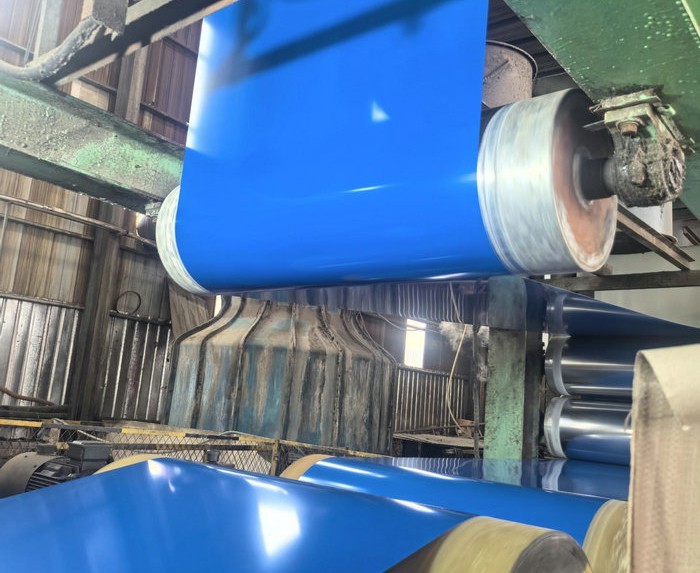
The core skeleton of the color coated sheet is a metal substrate, and the density difference of different materials directly affects the basic weight. Taking a thickness of 0.5mm as an example, the density of cold-rolled sheet substrate is 7.85g/cm ³, and the weight per square meter is 3.925kg; while aluminum zinc coated sheet has a density reduced to 6.8g/cm ³ due to the addition of aluminum element, resulting in a weight reduction of 13.4% at the same thickness. When Baosteel and other enterprises adopt hot-dip galvanized substrates, the weight of the coating increases by 120g per square meter, which is equivalent to a 3% increase in overall weight.
The production of color coated sheets adopts a two coating and two drying process, and the thickness of each coating layer is strictly controlled at 20-25 μ m. Taking polyester coating as an example, the top coat density is 1.3g/cm ³, the back coat density is 1.1g/cm ³, and the weight increase of double-sided coating is about 0.065kg/m ². If the customer requests PVC protective film, an additional 0.04kg/m2 will be added to the 30 μ m thick film layer. A case study of a certain engineering project shows that the weight of the finished product of 0.5mm galvanized substrate color coated sheet increased from 3.925kg to 4.03kg after two coatings, two baking, and film coating.
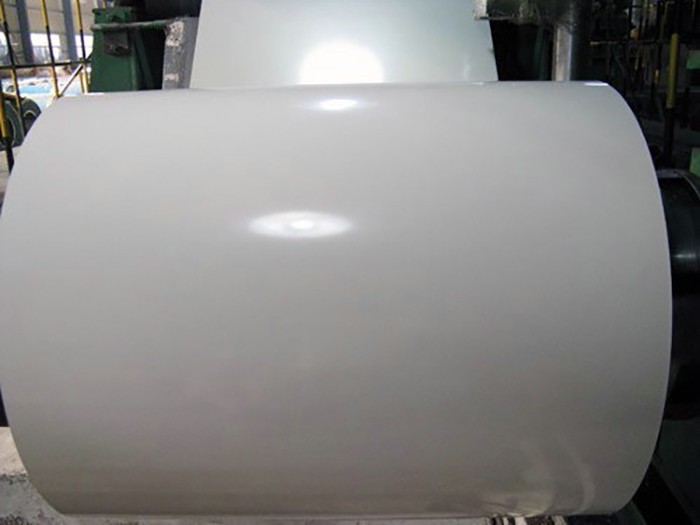
The industry standard calculation formula is: weight per square meter=substrate thickness x density x 1000+coating weight. Taking a 0.4mm hot-dip aluminum zinc substrate (density 6.8g/cm ³) as an example, the substrate weight is 0.4 × 6.8=2.72kg/m ²; After stacking double-sided polyester coating (0.065kg/m ²), the total weight reaches 2.785kg/m ². In Baosteel's enterprise standards, the output of 1200mm wide color coated coils per ton is 1000 ÷ (7.85 × substrate thickness), and 0.35mm substrate coils can produce 398 meters per ton.
China galvanized plate manufacturer: Boxing Shuangshengda Steel specializes in galvanized sheet, galvanized steel plate,Colour steel plate etc.We have a full range of product specifications and types, low prices, and more than 20 years of experience, worthy of your trust
 Address:Bo Xing County, Shandong Province
 E-mail: