Printed color coated sheet, as a composite material that combines decoration and functionality, has become an indispensable key material in modern industry by achieving pattern customization and performance optimization through surface printing technology. Its application areas cover multiple industries such as building decoration, home appliance manufacturing, transportation, and packaging printing. The following provides a detailed analysis from the perspectives of technical characteristics and industry demand.
1. In the field of architectural decoration: a dual upgrade of aesthetics and functionality
1.1 External wall decoration system
Printed color coated sheets have become the preferred material for high-rise building exterior walls due to their excellent weather resistance and corrosion resistance. Its surface can be printed with imitation stone, wood grain, or metallic texture patterns, and color stability of over 20 years is achieved through a fluorocarbon coating layer. In the curtain wall system, the composite of coated panels and aluminum honeycomb cores can meet the lightweight requirements (with a density only 1/5 of that of stone), and can also achieve complex curved surface shapes through 3D printing technology.

1.2 Interior Space Design
In public spaces such as commercial complexes and subway stations, printed color coated sheets are customized with personalized patterns through digital printing technology. For example, airport terminals use gradient color coated panels to divide functional areas, while hospital corridors use antibacterial coated panels to reduce the risk of cross infection. Its surface hardness is over 3H, which can resist daily scratches and reduce maintenance costs by 40% compared to traditional materials.
1.3 Door and Window System
Broken bridge aluminum alloy doors and windows use printed color coated sheets as decorative panels, and achieve a uniform coating thickness of 0.2mm through roller coating technology. This structure not only maintains the thermal conductivity of the metal (≤ 2.5W/m · K), but also reduces the heat transfer coefficient to 1.8W/(m ² · K) through a low-E coating, meeting the energy-saving standards for green buildings.
Table 1 Performance Parameters of Printed Color Coated Sheets in the Construction Field
|
Parameter Type
|
Technical Indicator
|
Application Scenario
|
|
Weather Resistance
|
No corrosion after 2000-hour salt spray test
|
Coastal building exterior walls
|
|
Fire Rating
|
Class A2 (GB8624-2012)
|
Large commercial complexes
|
|
Bending Strength
|
≥120MPa
|
Special-shaped curtain wall systems
|
|
Color Retention Rate
|
ΔE ≤ 1.5 (after 5 years of outdoor exposure)
|
High-end residential building facades
|
2. Home appliance manufacturing industry: the combination of functionality and differentiation
2.1 Appearance Design
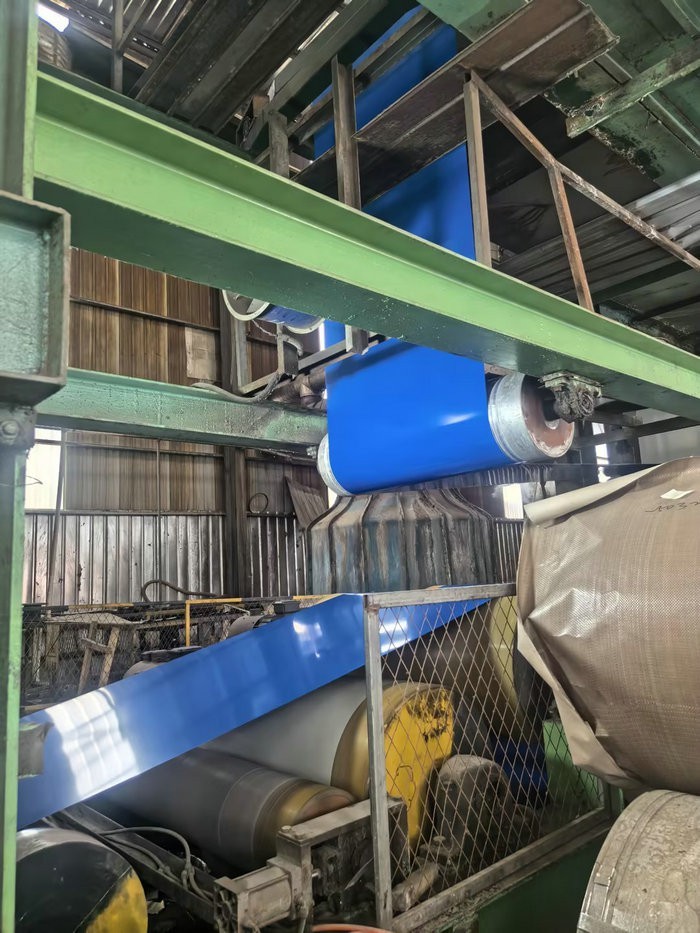
Refrigerators, washing machines, and other white goods use printed color coated sheets instead of traditional spray painting processes, and achieve pattern transfer with a precision of 0.05mm through UV curing technology. The surface resistance value of the coated plate can be controlled within the range of 10 ⁶ -10 ⁹ Ω, while meeting EMC (electromagnetic compatibility) requirements. In the outdoor unit of the air conditioner, the adhesion of the coated board still meets the level 0 standard after passing the salt spray test (96 hours).
2.2 Structural Component Optimization
The microwave oven liner is made of antibacterial printed color coated sheet, and its silver ion coating has a 99.9% inhibition rate against Escherichia coli. After the coating plate is combined with stainless steel, the thermal conductivity is increased to 15W/(m · K), which is 12% more energy-efficient than pure stainless steel liner. In the application of dishwasher liner, the coated plate showed no red rust formation after passing the CASS test (48 hours).
2.3 Control panel integration
The smart home appliance control panel adopts IMD (In Mold Decoration) technology, which integrates the printed color coating board with the touch module into a single piece. This structure achieves a mirror effect through HBC (High Brightness Chromium) treatment, while meeting the IP65 protection level. In the oven control panel, the coated board can withstand high temperatures of 200 ℃ without deformation.
3. Transportation field: balance between lightweight and durability
3.1 Interior of Rail Transit
The inner wall of the high-speed railway carriage is made of flame-retardant printed color coated sheet, with an oxygen index (OI) of ≥ 32%, which meets the EN45545-2 fire protection standard. After composite coating with aluminum honeycomb core, the weight per unit area is only 8kg/m ², which is 30% lighter than traditional materials. In the application of subway seats, the coated board has passed the DIN5510-2 fire test, and there is no risk of ignition from burning droplets.
3.2 Automotive Components
The shell of the new energy vehicle battery pack adopts a thermal conductive printed color coated sheet, with a thermal conductivity of 5W/(m · K), and no bubbles after 1000 hours of double 85 (85 ℃/85% RH) test. When connecting the coated plate to the steel frame, structural adhesive bonding technology is used, with a peel strength of ≥ 15N/mm. In the driver's cabin of commercial vehicles, the coating plate passed the vibration test (frequency 5-200Hz) without cracks.
3.3 Aviation Interior Materials
The cabin wall panels of the aircraft are made of low-density printed color coated sheets, with a density controlled within 1.2g/cm ³, and have passed the FAR25.853 vertical combustion test. The friction coefficient of the coated plate surface is controlled within the range of 0.3-0.4, meeting the requirements for emergency evacuation. In the application of cargo aircraft flooring, the load-bearing capacity of coated panels can reach 500kg/m ².
Table 2 Technical Requirements for Printing Color Coated Plates in the Transportation Field
|
Test Item
|
Rail Transit Standard
|
Automotive Industry Standard
|
Aviation Standard
|
|
Combustion Performance
|
EN45545-2 HL3 level
|
GB8410-2006 Class A
|
FAR25.853(a)
|
|
Chemical Resistance
|
Resistant to 10% hydrochloric acid for 240 hours
|
Resistant to 5% sulfuric acid for 48 hours
|
Resistant to Skydrol oil for 72 hours
|
|
Impact Strength
|
50J (drop hammer method)
|
30J (Charpy impact)
|
20J (instrumented impact)
|
|
Electromagnetic Shielding
|
≥30dB (10MHz - 3GHz)
|
≥20dB (100kHz - 1GHz)
|
≥15dB (1MHz - 10GHz)
|
4. Packaging and Printing Industry: Integration of Brand Display and Functional Protection
4.1 High end gift packaging
The packaging of alcoholic beverages is made of metal textured printed color coated sheets, which achieve a mirror effect through vacuum coating technology. The surface hardness of the coated board reaches 4H, which can resist scratches during transportation. In cosmetic packaging, the coating board has passed ROHS testing and the heavy metal content meets EU standards.
4.2 Industrial product packaging
The precision instrument packaging adopts anti-static printed color coated sheet, and its surface resistance value is controlled within the range of 10 ⁶ -10 ⁸ Ω. After the coated plate is compounded with EPE foam, the drop test (1.2m height) passes the ISTA 3A standard. In medical device packaging, coated plates have passed biocompatibility testing (ISO10993-1).
4.3 Digital Product Packaging
The mobile phone packaging box adopts a tactile printed color coated sheet, which achieves a leather like tactile sensation through a suede coating. The weight of the coated board is controlled within 250g/m ² to meet the requirements of automated packaging lines. In laptop packaging, the coated board has passed ISTA 6A simulated transportation testing.
5. Technological development trends and challenges
The current development of printed color coated sheets is moving towards functional integration: nano coating technology reduces coating thickness to below 3 μ m while achieving self-cleaning function; Digital printing technology reduces the time for changing plates from 72 hours to 2 hours and supports small batch customization; Intelligent sensing coatings can monitor structural stress in real-time and alert potential risks. However, the industry still faces challenges such as the upgrading of environmental regulations (such as the expansion of the restricted substance list in REACH Appendix XVII), fluctuations in raw material costs (aluminum price increases by 35%), and the need to achieve sustainable development through material recycling systems (coating board recycling rate target of 85%) and technological innovation (water-based coating substitution rate increased to 60%).
The deep integration of material science and printing technology is reshaping the product form and value chain of traditional manufacturing industry for printed color coated sheets. The continuous expansion of its application boundaries not only reflects the evolution of industrial aesthetics, but also promotes the transformation of functional materials towards intelligence and green direction.

 Language


 Address:Bo Xing County, Shandong Province
 E-mail: