
 Language


More Language
Language
With the continuous development of modern architecture, industrial manufacturing, and infrastructure, steel structures have found widespread application in various engineering projects due to their high construction efficiency, structural strength, and design flexibility. Among the many steel structural materials available, C-shaped steel is a common type of cold-formed steel. Thanks to its unique cross-sectional shape, light weight, and ease of installation, it is extensively used for building purlins, steel-structured factory buildings, storage facilities, equipment supports, and certain solar photovoltaic mounting systems.
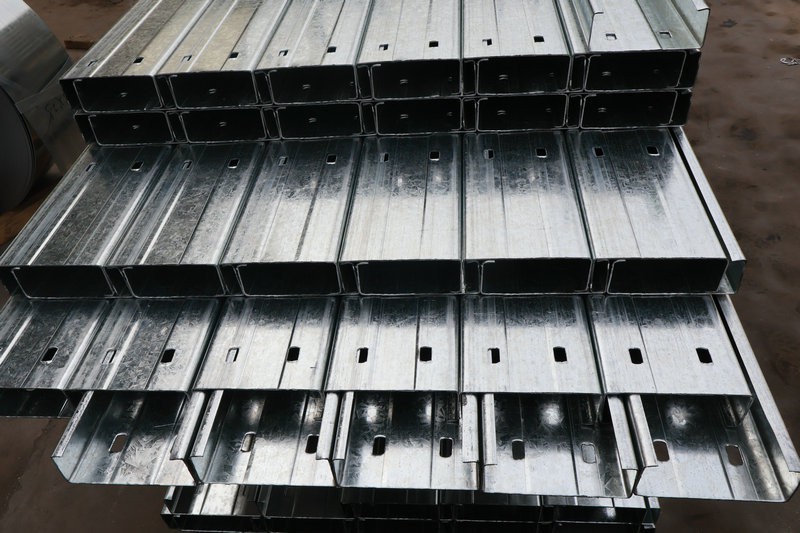
C-shaped steel is a steel product with a cross-section resembling the letter "C," typically manufactured from steel plates or strips through a cold-forming process. Its typical cross-section consists of a web and upper and lower flanges; some products also feature inward or outward-curving lips (or "curls") to enhance structural performance or meet connection requirements.
Compared to standard flat steel products, C-shaped steel utilizes a specific cross-sectional design to achieve structural performance suited to particular load-bearing conditions while using a relatively limited amount of material. Its specific load-bearing capacity depends on factors such as the steel grade, cross-sectional dimensions, plate thickness, shape, component length, and the method of installation and support; it cannot be determined solely by appearance or weight.
C-shaped steel is generally produced using a cold-forming process. During manufacturing, steel strips or plates are progressively bent by forming rollers to create a cross-section that meets design specifications. Depending on project requirements, the steel can also undergo processes such as cut-to-length cutting, punching, galvanizing, or other anti-corrosion treatments to facilitate subsequent installation and use.
Steel-structured factory buildings represent one of the most typical application scenarios for C-shaped steel. Roof purlins are usually installed between main steel beams or roof trusses to support roof panels and transfer loads from the roof to the main structure. C-shaped steel features a uniform cross-sectional shape, making it easy to arrange and secure roof panels at the required design spacing. For lightweight roofing systems where the span, loads, and installation conditions are suitable, C-shaped steel serves as a viable option for purlins. In practical engineering applications, purlins must withstand the dead weight of roofing panels, maintenance loads, wind loads, snow loads, and other design-specified actions. Designers must perform calculations based on the building's climatic conditions, purlin span, component spacing, and support conditions to ensure the structure possesses adequate strength, rigidity, and stability.
In addition to roofing, C-shaped steel is frequently used in the wall systems of steel-structured buildings. Wall purlins are typically installed between the main structural frames to secure metal wall panels, sandwich panels, or other envelope materials that meet design specifications. In industrial plants, warehouses, logistics centers, and certain commercial buildings, wall purlins must be spaced appropriately to facilitate panel installation and transfer loads to the main structure. Using C-shaped steel for wall purlins allows for custom sizing and pre-designed hole placement, thereby enhancing on-site installation convenience. However, component dimensions, connection methods, and corrosion protection requirements must still align with the specific wall panel type, building height, and environmental conditions.
Lightweight steel structures often require a large number of components that feature uniform cross-shaped steel is and are easy to transport and assemble. C-shaped steel can be utilized for secondary structural elements, supports for envelope systems, and other components validated by structural design. Compared to piece-by-piece on-site fabrication, the use of factory-prefabricated C-shaped steel components ensures dimensional consistency, precise manufacturing, and reduced on-site cutting work. In highly standardized construction projects, this approach also improves the efficiency of material management and installation logistics.
Warehouses typically require expansive interior spaces while demanding high installation efficiency for roofing and wall systems. C-shaped steel can serve as roof and wall purlins to support metal envelope panels. In warehouse expansion or new construction projects, designers can determine the purlin layout based on factors such as building span, roof slope, load requirements, and panel specifications. For warehouses utilizing prefabricated steel structures, C-shaped steel can be cut and punched at the factory, thereby reducing the need for secondary processing on-site.
Logistics centers often require a balance between space utilization, equipment operation, and building envelope requirements. C-shaped steel can be used for certain wall supports, equipment mounting frames, and other lightweight structural components, depending on the specific design. In such projects, the installation location and connection methods of the components must be coordinated with conveyor systems, piping, lighting, and other building systems to avoid construction difficulties caused by mismatched hole locations or inefficient component layouts.
In some warehousing equipment and lightweight storage systems, C-shaped steel can serve as a designed support, connection, or framing component. However, rack uprights, beams, and other critical load-bearing parts generally require design based on specific racking structural standards and load requirements. The fact that C-shaped steel is widely used in general construction does not mean that standard C-shaped steel is suitable for all racking applications. Before procurement, it is essential to verify that the product's cross-section, material properties, connection methods, and rated load-bearing capacity meet the specific system's requirements.
PV modules typically require mounting structures to secure them to roofs or ground-based foundations. These structures must support the weight of the modules themselves while also accounting for wind loads, snow loads, seismic forces, and other design conditions specific to the project site. C-shaped steel that has undergone structural analysis and anti-corrosion treatment can be utilized in certain PV support systems. Its cross-sectional dimensions, steel thickness, hole locations, and connection methods must align with the module layout, support span, and foundation structure.
When installing photovoltaic systems on the roofs of industrial plants and commercial buildings, the mounting structure design must fully account for the load-bearing capacity of the existing building structure. C-shaped steel may be used for certain mounting components or auxiliary supports; however, material specifications should not be determined solely based on roof surface area. Prior to construction, it is essential to verify whether roof purlins, main beams, and connection points can withstand the additional load, and to assess factors such as wind uplift, roof waterproofing, and requirements for installation and maintenance. For existing buildings, necessary structural inspections must also be conducted to prevent compromising building safety due to improper mounting structure installation.
In some ground-mounted photovoltaic projects, cold-formed steel serves as a component of the mounting system. Its suitability depends on terrain, foundation type, the corrosive nature of the environment, and the overall design of the mounting structure. For projects located in coastal, high-humidity, or highly corrosive environments, special attention must be paid to the quality of the steel coating, protection of cut edges, and long-term maintenance requirements. Anti-corrosion strategies should be determined based on the actual environment and design service life, rather than relying solely on the presence of a galvanized coating on the material surface.
In factories and production workshops, certain equipment requires installation on metal frameworks or support structures. Properly designed C-shaped steel can be utilized for auxiliary components of equipment bases, support frames, mounting crossbeams, and other non-standard structures. For systems requiring frequent equipment repositioning or the installation of accessories, pre-fabricated mounting holes can enhance assembly convenience. However, if components are subjected to significant vibration, impact, or concentrated loads, designers must verify the cross-section's load-bearing capacity and the strength of the connections.
Some electrical and piping installation systems employ C-shaped steel or similar open-profile steel shaped steel is as support members to secure cable trays, pipelines, and other facilities. In such applications, components must not only meet static load requirements but also account for support spacing, installation methods, vibration conditions, and environmental corrosion. For support systems with established product standards, specialized products that comply with those standards should be prioritized.
In automated production lines, assembly areas, and equipment maintenance platforms, C-shaped steel can be used for certain auxiliary frames and connecting components. Processes such as cut-to-length cutting and punching allow these components to be better adapted to various installation layouts.
However, for structures involving personnel standing, suspended equipment, or safety barriers, material specifications should not be determined solely based on ease of fabrication; design and acceptance must be based on actual loads, operating conditions, and applicable standards.
- In agricultural construction, engineered C-shaped steel can serve as part of the support structure for greenhouses, livestock facilities, and agricultural storage buildings. Since these facilities are often exposed to humid, saline, or corrosive environments for extended periods, corrosion resistance and maintenance requirements are key factors in material selection.
- In commercial buildings, C-shaped steel can be used for shop partition supports, lightweight envelope structures, suspended ceiling components, and decorative framing. Suitability depends on load-bearing requirements, fire safety regulations, and installation methods.
- In certain infrastructure projects, C-shaped steel may serve as auxiliary support or a mounting component for equipment. However, primary bridge structures, heavy-duty load-bearing systems, and other critical structures typically require specially designed and validated materials and components; standard C-shaped steel cannot simply be substituted for them.
(1) Efficient cross-sectional design. The C-shaped cross-section strikes a balance between material usage, structural performance, and installation requirements. For components suitable for open, thin-walled shaped steel is, the structural dead weight can be minimized while still meeting design specifications.
(2) Ease of fabrication and installation. C-shaped steel can be cut to specific lengths, punched, and otherwise processed to meet project requirements. Standardized processing helps ensure dimensional consistency among components and reduces the need for on-site fabrication.
(3) Suitable for mass production. The cold-roll forming process enables continuous production to uniform specifications, facilitating the fulfillment of bulk procurement needs for construction purlins, envelope supports, and other engineering projects.
(4) Facilitates transportation and on-site management. With appropriate cross-sectional dimensions, component lengths, and packaging methods, C-shaped steel is easy to categorize, label, and manage during on-site installation. However, actual transportation efficiency still depends on product length, quantity, and loading configurations.
(5) Flexible product specifications. C-shaped steel is can be manufactured with varying web heights, flange widths, lip dimensions, and material thicknesses to meet specific design requirements, structural layouts, and operational environments.
C-shaped steel is versatile cold-formed steel products primarily used for roof and wall purlins in steel-structured industrial buildings, warehouses, and logistics facilities, as well as in photovoltaic mounting systems, equipment installation frames, cable tray supports, and other light steel structural systems. Therefore, when selecting C-shaped steel is, one should first clarify the intended application and then determine the product specifications based on structural design, material properties, manufacturing precision, and the operating environment. Through proper material selection, standardized manufacturing, and correct installation, C-shaped steel is can provide stable and reliable structural performance in projects that meet design specifications.
China galvanized plate manufacturer: Boxing Shuangshengda Steel specializes in galvanized sheet, galvanized steel plate,Colour steel plate etc.We have a full range of product specifications and types, low prices, and more than 20 years of experience, worthy of your trust

 Address:Bo Xing County, Shandong Province
 E-mail: