
 Language


More Language
Language
With the continuous advancement of architectural decoration, interior renovation, industrial manufacturing, and new material technologies, market demands regarding the performance of plate materials have risen. Beyond basic strength and stability, there is increasing focus on corrosion resistance, water resistance, wear resistance, aesthetic appeal, ease of cleaning, and service life. Against this backdrop, "nano plates"—plates featuring specialized surface treatments or designs incorporating nanotechnology—are gaining market attention.
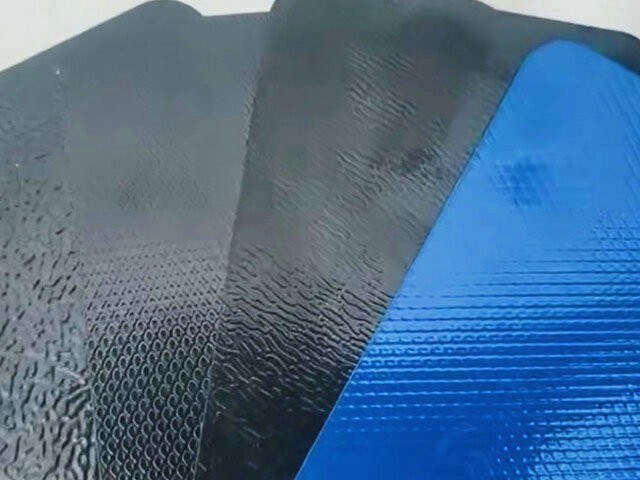
Nano plates are typically created by modifying conventional plates using nanomaterials, nano plates, or related surface treatment technologies. The term "nano" refers to materials or structures with dimensions on the nanometer scale. One nanometer is one billionth of a meter; due to their extremely small particle size, nanomaterials often exhibit surface and interfacial properties that differ from those of conventional materials.
In plate manufacturing, nanotechnology can be applied to surface coatings, waterproofing, stain resistance, wear resistance, corrosion protection, and the creation of functional composite materials.
Consequently, a nano plate is not necessarily made entirely of nanomaterials; rather, nanotechnology is typically used to enhance specific performance characteristics of the plate.
The specific composition of a nano plate depends on the product type. Some nano plates utilize metal substrates—such as aluminum, steel, or other metals—with functional coatings applied to the surface. Others use wood based plates, fiberplates, plastic sheets, or composite materials as substrates, creating a functional nano layer through specialized surface treatments.
Thus, nano plates may incorporate metal substrates, wood based substrates, inorganic materials, polymer materials, functional nanomaterials, and protective surface coatings. The substrate determines the plate's basic mechanical properties, while the nano plate serves to further enhance surface performance.
Manufacturing processes for nano plates vary depending on the specific product.
(1) A suitable substrate is prepared, followed by surface cleaning, sanding, or other pre treatment steps.
(2) A functional coating is applied to the surface in accordance with product design specifications. Some production processes may employ spraying, roll coating, dip coating, or other coating techniques to ensure the functional material evenly covers the surface of the plate.
(3) Heating, curing, or other processes are used to create a stable bond between the coating and the substrate.
(4) Testing for surface quality, adhesion, wear resistance, water resistance, and other performance metrics is also required.
Therefore, the final quality of nano plates depends not only on the nanomaterials themselves but is also closely linked to the quality of the substrate, the uniformity of the coating, and the production process.
(1) Good stain resistance: Certain nano plates reduce the adhesion of contaminants to the plate's surface, making it easier to clean off dust, grease, and other pollutants. This property is particularly valuable for applications such as kitchen walls, public spaces, and building interiors.
(2) Water resistance: Some nano surface treatment technologies reduce the adhesion and penetration of moisture on the material's surface. However, the water resistance effectiveness depends on the substrate, coating structure, and application quality; it should not be simply assumed that the entire plate is completely waterproof.
(3) Wear resistance: Well designed functional nano plates can enhance the wear resistance of the plate's surface. This property is significant for high traffic architectural spaces or surfaces that require frequent cleaning.
(4) Corrosion resistance: If the functional nano layer effectively prevents moisture and corrosive agents from contacting the substrate, it can help improve the plate's corrosion resistance. Surface protection is particularly important for metal substrates.
The primary differences between nano plates and ordinary plates usually lie in their surface treatments and functional designs.
Ordinary plates rely primarily on their base material to provide properties such as strength, water resistance, and corrosion resistance. Nano plates, on the other hand, may further enhance specific properties through the addition of a functional surface layer.
For example, the same metal substrate can exhibit varying levels of stain resistance, corrosion resistance, and wear resistance depending on the surface treatment applied. Consequently, the advantages of nano plates stem not from the "nano" label itself, but from the specific material formulations and surface technologies employed. When purchasing, consumers should not judge quality solely by the product name but should instead examine the actual technical specifications.
Architectural decoration is a key area where nano plates can be applied.
In interior fit outs, nano plates can be used for wall cladding, suspended ceilings, feature walls, partitions, public space décor, and commercial building interiors. plates with good stain resistance and easy to clean properties can reduce the burden of daily maintenance. For public buildings such as hotels, office complexes, shopping malls, and hospitals, ease of cleaning is a crucial factor when selecting decorative materials.
As modern households demand higher standards for renovation materials, nano plates are increasingly being used in furniture and home products.
For example, plates with functional surfaces can be used for cabinetry, furniture plates, interior wall plates, door plates, countertops, and decorative partitions. In areas prone to water and oil exposure—such as kitchens—plates with superior surface cleaning properties offer greater convenience for daily maintenance. However, the suitability of a specific product for kitchens, bathrooms, or other humid environments must be verified against the manufacturer's technical specifications.
Nano surface technology applies not only to architectural materials but also to certain industrial plates. For instance, surface coatings can be applied to equipment casings, machinery, metal structures, and other industrial products to enhance corrosion resistance, wear resistance, or stain resistance. In scenarios requiring high surface quality, functional coatings provide additional protection for the substrate.
Industrial users should prioritize parameters such as temperature resistance, chemical resistance, mechanical strength, and long term stability when selecting nano plates.
The advantages of nano plates depend on the specific product, but common features include:
(1) Versatile surface functionality: Properties such as stain resistance, water repellency, wear resistance, or corrosion resistance can be engineered to meet specific application requirements.
(2) Ease of cleaning: Certain nano surfaces minimize the adhesion of contaminants. (3) Diverse decorative effects: Nano plates can combine various colors, textures, and surface finishes to meet architectural decoration needs.
(4) Good durability: High quality coatings bond well with the substrate, enhancing the plate's long term performance.
(5) Wide range of applications: Depending on the substrate and manufacturing process, they can be used in sectors such as architecture, home furnishing, and industry.
There is a wide variety of nano plate products on the market, so one should not rely solely on the product name when purchasing.
(1) Understand the substrate material: There are significant differences in strength, water resistance, and corrosion resistance among different substrates.
(2) Pay attention to the specific type of nano plate: Different coatings offer different functional properties.
(3) Review test data regarding wear resistance, weather resistance, and corrosion resistance: If the product is intended for outdoor use, pay special attention to how the coating withstands UV radiation, rainfall, and temperature fluctuations.
(4) Also consider the plate thickness, dimensions, surface quality, and testing documentation provided by the manufacturer.
Nano plates generally do not refer to a single, fixed material; rather, they are a category of functional plates created by applying nanomaterials, nano plates, or nano surface treatments to traditional substrates to enhance specific properties. Depending on the substrate, nano plates may utilize metal, wood, plastic, or composite materials as a base, achieving superior stain resistance, water resistance, wear resistance, or corrosion resistance through functional surface treatments.
As new material technologies continue to evolve, nano plates are expected to advance further in terms of functionality, environmental friendliness, and high performance, offering a wider range of material choices for architectural decoration and industrial manufacturing.
China galvanized plate manufacturer: Boxing Shuangshengda Steel specializes in galvanized sheet, galvanized steel plate,Colour steel plate etc.We have a full range of product specifications and types, low prices, and more than 20 years of experience, worthy of your trust
 Address:Bo Xing County, Shandong Province
 E-mail: