
 Language


More Language
Language
With the continuous development of modern architecture, industrial manufacturing, and the decoration industry, steel plates are no longer merely basic materials used to meet structural strength requirements. Beyond strength, durability, and workability, factors such as corrosion resistance, surface color, decorative appeal, and service life are receiving increasing attention. Against this backdrop, color-coated steel plates have gradually become a common metal material in sectors including construction, home appliances, industrial equipment, and decoration.
Color-coated steel plates retain the inherent strength and workability of steel while enhancing corrosion resistance and aesthetic appeal through surface coatings; consequently, they are widely used in modern construction and industrial production.
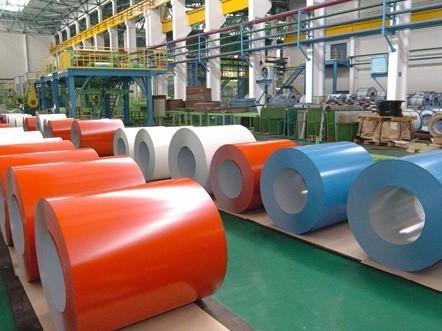
Color-coated steel plate—also known as pre-painted steel plate or simply "color-coated plate"—is not created by simply painting an ordinary steel plate after use. Instead, it is manufactured on industrial production lines through processes such as cleaning, pretreatment, coating application, and high-temperature curing of the metal substrate. Depending on the requirements, the base material can be galvanized steel, Al-Zn alloy coated steel, or other similar substrates.
Different types of coatings can be selected based on the intended operating environment and product specifications. Thus, color-coated steel plate is essentially a composite material comprising a steel substrate, a metallic coating layer, a chemical pretreatment layer, the paint coating, and a protective layer.
The production of color-coated steel plate typically employs a continuous manufacturing process.
(1) The steel plate surface is cleaned and pretreated to remove oil, dust, and other impurities that could impair coating adhesion.
(2) The steel plate undergoes chemical pretreatment to ensure stable adhesion of the subsequent coating to the substrate surface.
(3) Coating material is applied evenly to the steel plate surface using coating equipment.
(4) The coating is baked and cured to form a stable, durable finish.
Depending on product specifications, the steel plate can be coated on both sides with layers of varying thicknesses and colors. After cooling, inspection, and coiling or shearing, the final color-coated steel product is ready for further processing and construction use.
The widespread use of color-coated steel plate is attributed to its comprehensive performance characteristics.
(1) Rich color options: Color-coated steel plates offer a wide range of colors and surface finishes, meeting the design requirements of various architectural and decorative projects.
(2) Corrosion resistance: The surface coating minimizes direct contact between the steel substrate and external elements like moisture and air, thereby reducing the risk of corrosion.
(3) Ease of processing: Color-coated steel plates can be cut, bent, stamped, and formed to suit specific applications.
(4) Relatively lightweight: Compared to some traditional building materials, color-coated steel plates are easier to transport and install.
(5) Consistent quality through industrial production: Typically manufactured on continuous production lines, these plates allow for precise control over coating thickness and surface quality via the production equipment.
Color-coated steel plates have a wide range of applications, particularly in the construction industry. Key application areas include: building roofing; wall cladding; industrial plants; warehouses; modular/prefabricated buildings; home appliance casings; interior decoration; industrial equipment; metal door panels; and partitions or enclosure systems. Different usage scenarios require specific steel thicknesses, coating types, and levels of weather resistance; therefore, the appropriate product should be selected based on the intended use.
Roofing is one of the most common applications for color-coated steel plates. They can be processed into various roofing panel shapes, such as corrugated plates and other profiled steel panels.
As roofs are constantly exposed to sunlight, rain, wind, snow, and temperature fluctuations, the material requires good corrosion and weather resistance. The surface coating protects the steel substrate, while the wide variety of colors enhances the building's overall appearance.
Consequently, color-coated steel roofing is frequently found on industrial plants, warehouses, commercial buildings, and some residential structures.
In addition to roofing, color-coated steel plates are used for exterior walls and wall cladding systems. Modern industrial buildings often require a balance of structural functionality, construction efficiency, and aesthetic design. These plates can be processed into wall panels and combined with insulation materials to form the building's envelope. By selecting various colors and surface textures, industrial plants, warehouses, and commercial buildings can achieve a more uniform appearance. For wall panels intended for long-term outdoor use, coating products with appropriate weather resistance should be selected based on the local climate.
Industrial plants and warehouses typically require roofing and wall materials covering large surface areas. Color-coated steel plates are widely used in such buildings due to their ease of processing, high installation efficiency, and diverse color options. These plates can be pre-fabricated to specific dimensions in the factory before being transported to the construction site for installation, which helps minimize on-site processing and boosts construction efficiency.
While both ordinary and color-coated steel plates are steel-based, they differ significantly in surface structure and usage characteristics. Ordinary steel plates usually require subsequent anti-corrosion treatments—such as painting, plating, or other surface finishes—tailored to the specific operating environment.
In contrast, color-coated steel plates undergo standardized coating processes during manufacturing. Their key advantage lies in having a uniform surface color and a protective coating, which reduces the need for on-site painting.
Additionally, color-coated steel plates are available in various colors to meet architectural design requirements, making them highly adaptable for decorative and building envelope applications.
When selecting color-coated steel plates, one should look beyond just the color:
(1) Consider the plate thickness: Different architectural and industrial applications have varying requirements for load-bearing capacity and workability.
(2) Consider the substrate type: Different substrates—such as galvanized steel and Galvalume (Al-Zn alloy coated) steel—have distinct characteristics.
(3) Consider the coating type and thickness: Different coatings are suitable for different environments.
(4) Consider the operating environment: If the plates will be exposed to humidity, high temperatures, or intense UV radiation for extended periods, corrosion resistance and weatherability become critical factors.
(5) Consider the color, surface quality, dimensional accuracy, and technical specifications provided by the supplier.
Although color-coated steel plates possess inherent corrosion resistance, proper maintenance remains essential. During use, avoid prolonged scratching of the surface coating by sharp objects. If significant scratches appear on the steel plate's surface, they should be treated promptly and appropriately to prevent moisture from coming into long-term contact with the exposed steel substrate. For building roofing and wall cladding, it is also advisable to regularly inspect connection points, edge areas, and drainage systems. Promptly removing dust, fallen leaves, and other contaminants from the surface helps maintain the steel plate's appearance.
Color-coated steel plate is a type of metal plate that has undergone continuous coating and curing processes; it typically utilizes galvanized or Al-Zn alloy-coated steel as the substrate, with a surface coating that provides both protective and decorative functions. Characterized by a wide range of colors, ease of processing, aesthetic appeal, and a certain level of corrosion resistance, it is widely used in applications such as building roofing and wall cladding, industrial plants, warehouses, modular buildings, home appliances, and industrial equipment.
When selecting color-coated steel plates, factors such as the substrate, plate thickness, coating type and thickness, weather resistance, and color should be comprehensively considered based on the specific operating environment and project requirements. As the construction industry continues to demand higher standards for construction efficiency, aesthetic design, and material durability, color-coated steel plates will continue to play a vital role in modern architecture and industrial manufacturing.
China galvanized plate manufacturer: Boxing Shuangshengda Steel specializes in galvanized sheet, galvanized steel plate,Colour steel plate etc.We have a full range of product specifications and types, low prices, and more than 20 years of experience, worthy of your trust
 Address:Bo Xing County, Shandong Province
 E-mail: