
What is Color Printed Steel Plate?

Color printed steel plate is a composite material made of metal substrate as the core, through surface pretreatment, coating, pattern printing, and curing processes. Its core value lies in combining the mechanical properties of metals with the decorative and functional properties of printing technology, widely used in fields such as building curtain walls, home appliance panels, and interior of transportation vehicles. This article will be expanded from four aspects: definition, process flow, performance characteristics, and application scenarios, with a comparison table of key parameters attached.
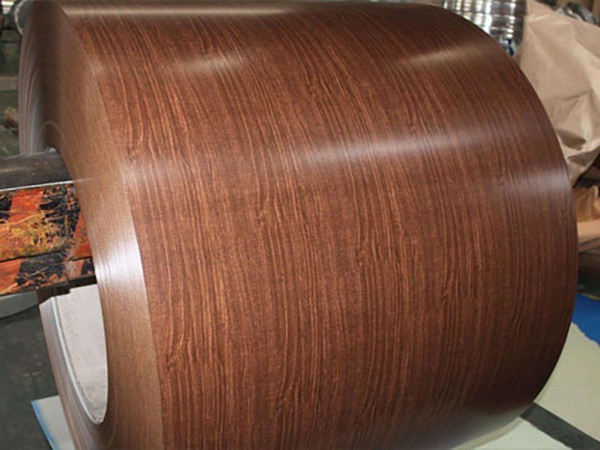

Color Printed Steel Plate


1. Definition and Classification

Color printed steel plate is a composite material made of cold-rolled steel plate, hot-dip galvanized steel plate or aluminum zinc coated steel plate as the substrate, which is subjected to surface chemical treatment (such as degreasing, phosphating), coated with organic coatings (such as polyester, silicon modified polyester, fluorocarbon coating), and then patterned through printing process. According to the different coating types and printing processes, it can be divided into the following three categories:


Classification Basis


Type

Characteristics

Coating Type


Polyester Color-Coated Sheet

Low cost, average weather resistance, suitable for interior decoration


Silicone-Modified Polyester Color-Coated Sheet


Enhanced weather resistance, suitable for scenarios with moderate environmental requirements


Fluorocarbon Color-Coated Sheet


Excellent weather resistance (over 15 years), suitable for highly corrosive environments

Printing Process

Photogravure Printing


High pattern precision (resolution up to 300dpi), suitable for complex patterns


Screen Printing


Thick ink layer, suitable for designs with a strong three-dimensional effect


Digital Inkjet Printing


Flexible production, supports small-batch customization


2. The core process flow of color printing steel plate

The production of color printed steel plates requires four major processes: substrate pretreatment, coating, pattern printing, and curing molding. The technical parameters of each process directly affect the quality of the finished product.

1. Substrate pretreatment

The substrate undergoes degreasing, phosphating, and passivation treatment to form a dense chemical conversion film. The thickness of the phosphating film should be controlled at 2-5 μ m to ensure that the coating adhesion is ≥ 5N/mm ². The quality of pre-treatment directly affects the lifespan of the coating, for example, uneven phosphating film can cause blistering or peeling of the coating.

2. Coating application

Using roller coating method to achieve uniform coating coverage:
Two roll reverse coating: suitable for low viscosity coatings (viscosity 20-50 seconds, Ford No. 4 cup), coating thickness 5-25 μ m, accuracy ± 1 μ m.
Three roll reverse coating: suitable for high viscosity plastic sol (viscosity 80-120 seconds), with a coating thickness of 50-100 μ m, controlled by a metering roller to control the coating flow rate.
The coating thickness needs to be adjusted according to the application scenario, for example, the coating thickness for building curtain wall panels is usually 25-30 μ m, and for home appliance panels it is 15-20 μ m.

3. Pattern printing

The mainstream process is gravure printing:
Plate making: Laser engraved gravure cylinder with a mesh depth of 20-50 μ m to ensure stable ink transfer.
Printing: The roller pressure is 0.2-0.5MPa, the printing speed is 80m/min, the horizontal error of the pattern is ≤ 0.1mm, and the vertical error is ≤ 0.5mm.
Protection: Apply transparent polyester paint (thickness 0.5-1 μ m), and after baking and curing, improve wear resistance (hardness up to 3H).

4. Solidification molding

The baking temperature is controlled at 230-250 ℃, and the time is adjusted according to the coating thickness (such as 8-10 seconds for a 25 μ m coating). Insufficient curing can lead to a decrease in coating adhesion, while overheating may cause yellowing or embrittlement.
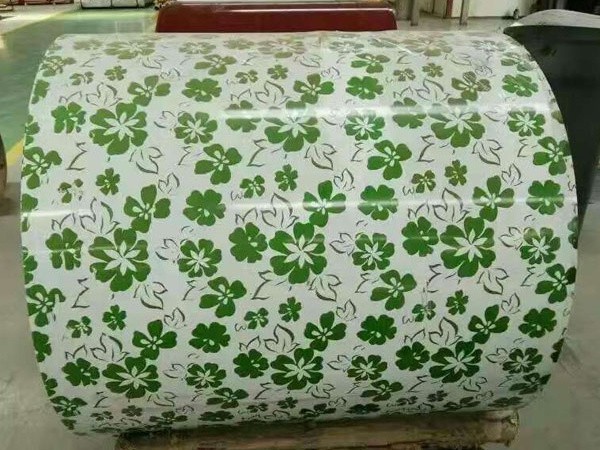

Color Printed Steel Plate


3. Performance characteristics of color printed steel plate

Color printed steel plates achieve a balance between decoration, weather resistance, and environmental friendliness through material design and process optimization.

1. Decorative

Supporting diversified effects such as imitation stone, imitation wood grain, and metal wire drawing, with a pattern resolution of 300dpi and a color difference Δ E ≤ 1.5 (CIE1976 standard), meeting the personalized needs of high-end buildings and home appliances.

2. Weather resistance

Fluorocarbon coated steel plates can withstand 1000 hours without corrosion in salt spray tests, and have a gloss retention rate of ≥ 80% after artificial accelerated aging tests. They are suitable for coastal or highly polluted environments.

3. Environmental friendliness

The application of water-based coatings and powder coatings results in VOCs emission concentrations ≤ 50mg/m ³, and the RTO incineration device is used to achieve standard emissions of exhaust gas. Some products have passed LEED certification and meet green building standards.

4. Processing capability

The substrate elongation rate is ≥ 18%, and deep processing such as stamping and bending can be carried out. After forming, the coating has no cracking or peeling. For example, the panel for household appliances needs to pass a 90 ° bending test, with a bending radius of ≥ 2 times the thickness of the board.


4. Application scenarios of color printed steel plates

Color printed steel plates have achieved large-scale applications in multiple fields due to their comprehensive performance

1. Construction field

Used for curtain walls, roofs, and interior decoration, replacing traditional aluminum and stone panels. For example, the lifespan of fluorocarbon color coated panel curtain wall system can reach 20 years, reducing maintenance costs by 40%.

2. In the field of household appliances

Refrigerators, washing machines, and air conditioning enclosures are coated with high gloss or matte to enhance product texture. Silicon modified polyester coated steel plate has excellent fingerprint resistance and is suitable for touch panels.

3. Transportation sector

The interior of subway cars and ship cabins are coated with low VOCs to meet indoor air quality standards. Flexible printing technology can achieve simulation effects such as leather patterns and carbon fiber patterns.
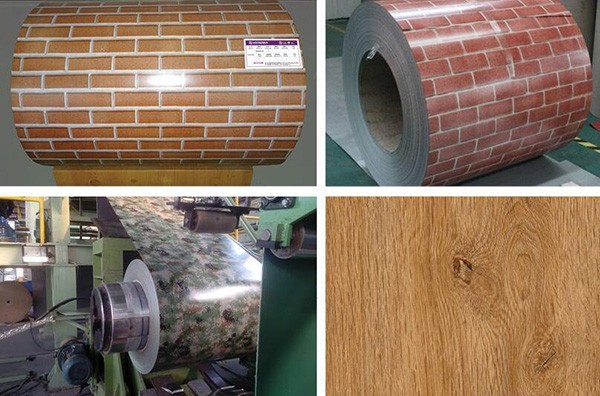

Color Printed Steel Plate


5. Comparison Table of Technical Parameters


Parameter


Polyester Color-Coated Sheet


Silicone-Modified Polyester Color-Coated Sheet


Coating Thickness (μm)


15 - 25


20 - 30


Weather Resistance (years)


5 - 8


8 - 12


Hardness (Pencil)


2H


3H


Salt Spray Test (h)


500


800


Cost (Relative Value)


1.0


1.3


Color printed steel plates, as a cross-border crystallization of metal materials and decorative arts, are reshaping traditional industrial boundaries with the positioning of "functional aesthetic materials". The color persistence and texture diversity achieved through high-precision printing technology not only break through the monotonous appearance limitations of traditional steel plates, but also become the preferred material in fields such as building curtain walls, home appliance panels, and transportation interiors due to its weather resistance, corrosion resistance, and ease of processing. In the future, with the integration of technologies such as 3D printing and intelligent color matching, color printed steel plates may further expand into emerging fields such as cultural and creative products and smart homes, becoming a bridge connecting industrial manufacturing and artistic design.

Contact
 Address:Bo Xing County, Shandong Province
 E-mail:ssd@cnsststeel.com