
 Language


More Language
Language
With the development of modern architecture, industrial manufacturing, and transportation, the importance of metal plates in building envelopes, decorative applications, and structural components has steadily increased. Among the various metal materials available, aluminum magnesium manganese plates have emerged as a key material for large-scale public buildings, commercial facilities, and industrial plants, thanks to their light weight, superior corrosion resistance, excellent workability, and long service life. They are widely used in structures such as airport terminals, stadiums, exhibition centers, industrial factories, and transportation hubs.
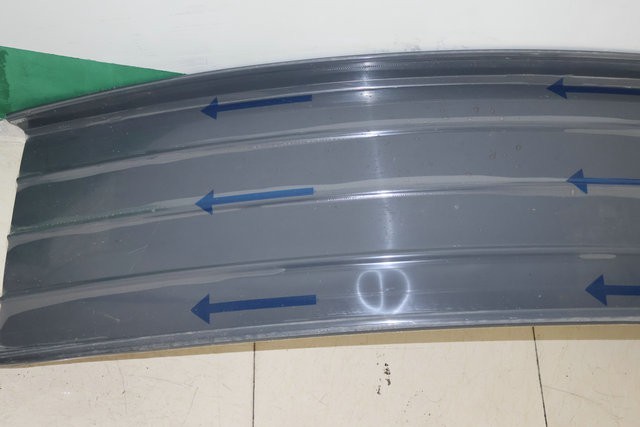
Aluminum magnesium manganese plates are aluminum-based alloy products enhanced by the addition of alloying elements such as manganese and magnesium to improve their overall performance. These plates fall into the category of aluminum alloys suitable for building envelopes and metal-forming applications; their specific grade, alloy composition, and mechanical properties are determined by product standards and the manufacturer’s production requirements. Aluminum itself is lightweight and offers good resistance to atmospheric corrosion. Manganese contributes to improved strength and workability, while magnesium helps enhance the alloy's strength and other comprehensive properties. By carefully controlling the alloy composition, heat-treatment state, and rolling process, these plates can be tailored to meet the specific demands of various architectural and industrial applications.
Aluminum magnesium manganese plates are commonly used in metal roofing systems, as well as in building facades, cornices, decorative elements, and other applications requiring lightweight metal panels. In practical construction, they are integrated with supporting structures, connectors, fastening systems, and drainage components to form a complete building envelope system. It is important to note that the term "aluminum-manganese-magnesium plate" is not a generic label for all aluminum alloy plates. Performance varies significantly based on the specific alloy grade, material temper, thickness, and surface treatment. Therefore, when procuring these materials, it is essential to verify the actual specifications and technical parameters rather than relying solely on the name "aluminum-manganese-magnesium plate" to determine its suitability for a given application.
The density of aluminum is significantly lower than that of steel; consequently, when used to meet specific design requirements, aluminum magnesium manganese plates can help reduce the dead load of roofing systems. For buildings with large spans, public venues, and large-scale industrial facilities, the weight of roofing materials is a critical factor in structural design. Utilizing lightweight roofing materials helps control the dead load of the roof system and offers greater flexibility in structural design. However, the total load on a roof also encompasses supporting components, thermal insulation, waterproofing layers, installed equipment, as well as potential wind and snow loads; therefore, the safety of the entire roof structure cannot be determined solely by the weight of the roofing panels.
Aluminum magnesium manganese plates can form a natural oxide film on their surface, which helps slow down further oxidation in appropriate environments. Consequently, these panels exhibit excellent atmospheric corrosion resistance, making them well-suited for many construction projects exposed to the outdoors for extended periods. Nevertheless, "corrosion resistance" does not imply complete immunity to corrosion. Localized corrosion may still occur in environments with high salt-spray levels, areas prone to prolonged water accumulation, or situations involving improper contact between dissimilar metals. Therefore, projects located in coastal regions or industrial settings require careful evaluation based on the specific environment, material specifications, and connection methods.
Aluminum magnesium manganese plates possess a degree of plasticity, allowing them to be shaped through processes such as roll forming or bending to meet specific architectural design requirements. This formability is particularly valuable for projects involving arched roofs, curved structures, or building envelopes with unique profiles. By appropriately selecting the material temper, thickness, processing equipment, and forming parameters, these panels can be adapted to a wide range of design needs. However, the fabrication of complex curved surfaces requires professional process design, with careful consideration given to factors such as material springback, localized deformation, and the detailing of connection points.
Provided that the materials are selected appropriately, the design adheres to relevant standards, the installation is executed correctly, and the system is properly maintained, aluminum magnesium manganese plates are suitable for long-term use in building envelopes. The surface oxide film helps resist corrosion in typical atmospheric environments, while a well-designed roof system can minimize the risks of water accumulation and leakage. The actual service life is influenced by various factors, including the severity of environmental corrosion, the specific alloy grade, panel thickness, the connection system, construction quality, and ongoing maintenance. Therefore, it is not possible to establish a uniform service life for all aluminum-manganese-magnesium (Al-Mn-Mg) panels based solely on their material designation.
Through various panel profiles, surface treatments, and installation methods, aluminum magnesium manganese plates can achieve a wide range of visual effects. Depending on project requirements, the material can feature a natural metallic finish, a coated surface, or other treatments tailored to specific design needs. This design flexibility makes the material well-suited for modern commercial, public, and industrial buildings. Architects can integrate roof curvatures, facade contours, and overall color schemes to create building envelopes with distinct visual characteristics.
Facilities such as airport terminals, stadiums, exhibition centers, railway stations, and large commercial complexes often feature roofs with expansive areas, long spans, or complex geometries. These structures must not only meet requirements for rain protection, drainage, and weather resistance but also harmonize with the building’s overall aesthetic and structural design. aluminum magnesium manganese plates are lightweight and possess excellent formability, allowing them to be integrated into metal roofing systems to create a continuous roof covering. For projects involving curved roofs or unique architectural profiles, the panels can be processed into the required shapes using specialized forming equipment.
Industrial plants, warehouses, and logistics centers typically feature large roof areas, where construction efficiency, material weight, and long-term maintenance costs are key considerations. aluminum magnesium manganese plates can be incorporated into metal roofing systems that meet specific design criteria, effectively fulfilling the requirements for the building envelope.
When selecting materials for industrial facilities, the production environment must also be taken into account. If the facility contains corrosive gases, high humidity, or specific chemical substances, their potential impact on the roof panels and connecting components must be carefully evaluated.
Modern architecture places an increasing emphasis on formal design; consequently, arched roofs, undulating (wave-like) roofs, and other non-planar structures have become common in public and commercial projects. The formability of aluminum magnesium manganese plates enables their use in various curved roofing systems. Depending on the design specifications, the panels can be shaped into the desired contours using specialized roll-forming equipment or other forming processes. For roof structures with varying curvatures and spans, the processing approach must be determined based on factors such as panel thickness, alloy temper, panel profile, and support configuration.
The standing-seam technique is a common application for aluminum magnesium manganese plates in architectural roofing. This system utilizes specialized panel profiles and connection structures to join the edges of adjacent panels, creating a continuous metal roof covering. Such systems typically minimize the number of exposed fasteners on the roof surface and can incorporate sliding attachment mechanisms to accommodate the thermal expansion and contraction of the metal panels.
Commercial facilities—such as shopping malls, office buildings, hotels, and mixed-use complexes—require a balance between aesthetic appeal, weather resistance, and ease of maintenance. Through custom panel profiling, bending, and surface finishing, Al-Mg-Mn panels can achieve a modern facade appearance. The selection of panel specifications, connection methods, and support structures should be based on the specific design requirements of the facade system. Furthermore, facade materials must meet project-specific criteria regarding wind loads, structural deformation, waterproofing, and fire safety; the suitability of these panels for a given project cannot be determined solely by their lightweight and corrosion-resistant properties.
Public buildings—including airports, transit stations, stadiums, and cultural venues—often feature expansive facade areas and complex architectural forms. Al-Mg-Mn panels can be employed for decorative envelope components, providing a cohesive metallic appearance. For public facilities characterized by high foot traffic or challenging maintenance access, particular attention must be paid to the reliability of connection components, panel attachment methods, and provisions for future inspections. The design and installation of facade panels must comply with local building codes and project-specific technical requirements.
Al-Mg-Mn plates can also be fabricated into components such as eaves, roof edge trims, decorative cladding, and other metal elements. As these components must integrate with the roofing and facade materials, their color, thickness, fabrication method, and connection details should be carefully coordinated. For areas prone to water accumulation or long-term exposure to rain, drainage paths should be designed appropriately, and protective measures should be applied to cut edges and connection points. This helps reduce the risk of localized corrosion and water leakage.
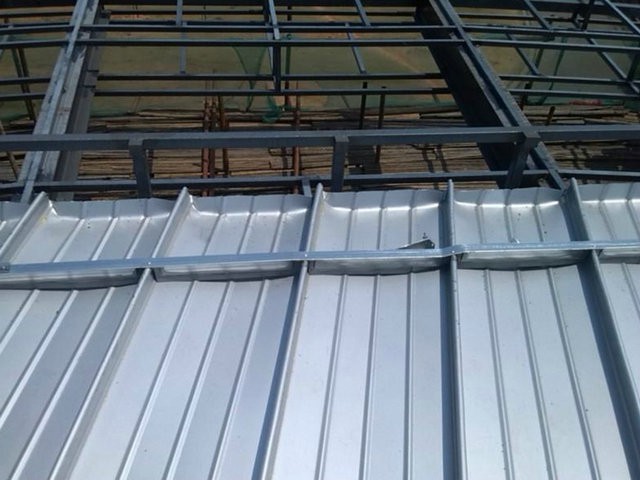
Warehouses, logistics centers, and distribution facilities require extensive roofing and building envelope systems. aluminum magnesium manganese plates can be utilized in certain roofing systems, providing a lightweight metal covering for the structures. In warehousing projects, panel specifications should be determined based on factors such as building span, support spacing, wind loads, and the operational environment. If a warehouse stores items that are corrosive or require specific environmental conditions, the impact of both the interior and exterior environments on the panels must be evaluated.
In some industrial projects, aluminum magnesium manganese plates can be used as external cladding, protective covers, or auxiliary enclosure components for equipment, provided they meet relevant requirements. Their low weight and excellent workability facilitate the fabrication of metal panels in specific shapes. However, the selection of materials for equipment cladding must account for factors such as temperature, vibration, mechanical loads, and exposure to various media. If the equipment operates at high temperatures or if the panels may come into contact with corrosive chemicals, the compatibility between the alloy and the specific operating conditions must be verified.
In certain transportation hubs, commercial facilities, and large-scale industrial buildings, aluminum magnesium manganese plates may be used for decorative cladding, rain-shielding elements, or other auxiliary enclosure components. Such applications typically prioritize dimensional accuracy, structural connections, weather resistance, and ease of maintenance. For components subject to significant mechanical loads or those serving safety-critical functions, specialized engineering design is required; standard architectural panel specifications cannot substitute for the rigorous validation necessary for structural materials.
(1) Prior to installation, the surfaces of the panels should be inspected for visible scratches, deformations, or other damage, and it must be confirmed that the material specifications align with the design requirements. During handling and storage, care should be taken to prevent the panels from rubbing against one another, sustaining impacts, or being exposed to excessively damp environments for extended periods.
(2) During installation, appropriate fasteners and connection structures must be used in accordance with the system design requirements, with sufficient allowance provided for thermal expansion and contraction. Aluminum alloy panels undergo dimensional changes with temperature fluctuations; improper fastening methods can lead to panel deformation, abnormal stress at joints, or damage to connection points.
(3) Furthermore, direct contact between aluminum panels and incompatible dissimilar metals should be avoided, especially in humid or saline environments. Where necessary, isolation measures must be implemented as per design specifications to mitigate the risk of galvanic corrosion.
(4) For roof installations, particular attention must be paid to drainage, overlapping, joints, and the waterproofing of penetrations. Even if the panels themselves possess excellent corrosion resistance, poor drainage design or improper treatment of connection points can still result in leaks.
(5) Routine maintenance should include regular inspections of the panel surfaces, connection components, drainage paths, and areas prone to water accumulation. Any signs of loosening, damage, or abnormal corrosion should be promptly addressed through professional assessment and repair. When cleaning, the method chosen should be appropriate for the specific surface finish; avoid using cleaning agents or tools that could damage the material or its coating.
Aluminum magnesium manganese plates are widely used in construction. Characterized by their relatively low weight, excellent workability, and high corrosion resistance, they are well-suited to the requirements of a diverse range of modern architectural projects. A thorough understanding of the applications and properties of these panels helps users select materials more efficiently, optimize construction quality, control long-term maintenance costs, and secure the most suitable metal panel solutions for modern building projects.
China galvanized plate manufacturer: Boxing Shuangshengda Steel specializes in galvanized sheet, galvanized steel plate,Colour steel plate etc.We have a full range of product specifications and types, low prices, and more than 20 years of experience, worthy of your trust


 Address:Bo Xing County, Shandong Province
 E-mail: