
 Language


More Language
Language
As the modern construction industry evolves, building materials must meet not only basic strength requirements but also criteria regarding weight, corrosion resistance, workability, service life, and aesthetic appeal. This is particularly true for projects such as large-scale public buildings, airports, stadiums, commercial centers, and industrial plants, where roofing and facades are constantly exposed to rain, sunlight, wind, and temperature fluctuations; consequently, material durability has become a priority.
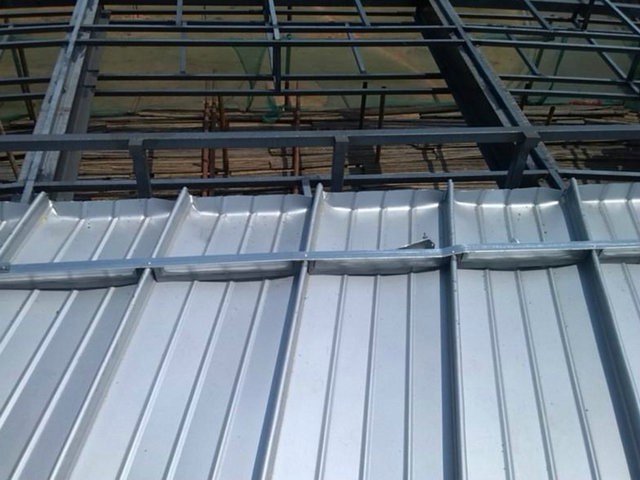
An aluminum-magnesium-manganese plate is an aluminum alloy sheet primarily composed of aluminum, with alloying elements such as magnesium and manganese added. Aluminum serves as the base material, offering excellent corrosion resistance and low density, while magnesium and manganese enhance the material's strength and workability.
In construction, these plates are typically profiled, bent, seamed, or otherwise processed to suit specific roofing and wall system requirements. Compared to traditional architectural metals, Al-Mg-Mn plates are lightweight yet capable of meeting the stringent weather resistance and aesthetic standards required for many construction projects.
Roofing is one of the most common applications for Al-Mg-Mn plates. Large-scale buildings often feature expansive roof areas that must withstand prolonged exposure to rain, sunlight, wind loads, and temperature changes; therefore, roofing materials require superior weather resistance and stability.
Al-Mg-Mn plates can be installed using techniques such as folding and seaming to create continuous metal roofing systems. This structural approach minimizes potential issues associated with the numerous mechanical fasteners found in traditional roofing and accommodates the complex design requirements of large-scale roofs.
Consequently, Al-Mg-Mn plates are frequently used for the roofs of large commercial buildings, stadiums, airport terminals, railway stations, exhibition centers, industrial facilities, and public buildings.
Modern architectural design increasingly emphasizes unique forms. Structures such as stadiums, exhibition centers, and public buildings often feature curved, wave-like, or other complex roof geometries. Aluminum-magnesium-manganese alloy plates possess excellent ductility and workability, allowing them to be bent and formed to varying degrees in accordance with architectural design requirements. Through appropriate processing techniques, the plates can be shaped into roofing structures with diverse curvatures. This versatility enables them to meet the needs of standard flat roofs while also being suitable for projects featuring complex architectural forms.
In addition to roofing, aluminum-magnesium-manganese plates can be utilized for certain exterior wall and façade systems. Exterior walls are constantly exposed to the elements, facing factors such as rainfall, ultraviolet radiation, temperature fluctuations, and air pollution. The aluminum alloy material itself offers superior corrosion resistance, making it ideal for exterior building areas that demand high durability. Furthermore, these plates can satisfy aesthetic requirements through various surface treatments and color designs, lending a modern look to the building's exterior.
Metal curtain walls are a common form of exterior wall construction in modern architecture. Characterized by their relatively low weight and processing flexibility, aluminum-magnesium-manganese plates can be fabricated into various shapes to meet specific curtain wall design requirements. Within a curtain wall system, the plates serve not only a decorative function but must also integrate effectively with supporting structures, insulation layers, and waterproofing systems. Consequently, practical engineering applications require the determination of plate thickness, connection methods, and surface treatments based on the specific architectural design.
(1) Lightweight: The density of aluminum is significantly lower than that of steel; thus, for a given volume, aluminum alloy materials are much lighter. For large-scale buildings, the use of lightweight roofing materials can reduce the structural load.
(2) Excellent Corrosion Resistance: Aluminum naturally forms an oxide layer when exposed to air, providing a degree of protection for the base material. With the proper selection of plates and appropriate design, they can meet long-term usage requirements in most standard architectural environments.
(3) Good Workability: Aluminum-magnesium-manganese plates possess inherent ductility, allowing them to undergo bending, profiling, and seaming processes to suit architectural designs.
(4) Suitable for continuous roofing systems: The plates can be joined using methods such as standing-seam locking, making them ideal for large-scale roofing projects.
(1) Airport terminals: Airport terminals typically feature large roof areas and complex architectural forms, requiring roofing materials that offer both weather resistance and aesthetic appeal.
(2) Sports venues: Sports venues often utilize long-span structural designs with extensive roof areas; some projects also require specialized curved geometries. The formability of aluminum-magnesium-manganese plates allows them to adapt to these complex roof structures.
(3) Railway stations: Modern railway stations often feature expansive roofs and large public spaces; aluminum-magnesium-manganese plates can be used for sections of the roofing and exterior wall systems.
(4) Commercial buildings: Shopping malls, commercial complexes, and large-scale commercial buildings can utilize aluminum-magnesium-manganese plates for roofing or facade cladding.
(5) Industrial buildings: Certain industrial plants and large-scale manufacturing facilities can also employ aluminum-magnesium-manganese plates as roofing material.
Coastal air typically has high salt content, requiring architectural metal materials to possess strong corrosion resistance. Aluminum alloys inherently offer good corrosion resistance, making aluminum-magnesium-manganese plates suitable for use in many coastal buildings.
However, this does not mean that all aluminum-magnesium-manganese plates are suitable for every marine environment. Actual selection requires consideration of factors such as: aluminum alloy grade; plate thickness; surface treatment; architectural design; drainage systems; connection materials; and local environmental conditions.
Particular attention must be paid to the risk of electrochemical corrosion caused by direct contact between dissimilar metals; therefore, appropriate fasteners and isolation measures must be selected during construction.
Beyond standard buildings, aluminum-magnesium-manganese plates can be applied to structures that demand high standards of aesthetics and durability.
Examples include: museums; exhibition centers; cultural buildings; large-scale sports facilities; transportation hubs; commercial complexes; and high-end public buildings. These structures often feature expansive roof areas or complex curved surfaces; consequently, the materials used must not only meet basic performance standards but also offer good workability and formability.
While these plates offer numerous advantages, proper design and installation are equally critical.
(1) Materials must be selected based on local climatic conditions.
(2) Plate thickness and structural configuration should be determined according to the roof span, load requirements, and design specifications. Care must be taken during installation to avoid scratching the plate surfaces.
(3) The roof drainage system requires a sound design to minimize the risk of prolonged water ponding.
(4) Issues regarding electrochemical corrosion must be addressed when connecting dissimilar metals. For large-scale projects, installation must comply with architectural design codes and professional construction standards.
Both aluminum-magnesium-manganese plates and steel roofing plates are suitable for roofing applications, yet they possess distinct material properties. Steel plates generally offer higher strength but rely on plating or coatings for corrosion protection. In contrast, aluminum-magnesium-manganese plates are based on aluminum alloy and possess inherent corrosion resistance. They are typically lighter in weight and offer superior ductility and formability.
Therefore, neither material is inherently superior to the other; the choice depends on factors such as the building structure, budget, environmental conditions, and specific usage requirements.
Aluminum-magnesium-manganese plates are architectural metal sheets based on aluminum and alloyed with elements such as magnesium and manganese. They are primarily used for roofing, exterior walls, metal curtain walls, and the facades or decorative systems of large public buildings. Thanks to their light weight, excellent corrosion resistance, good workability, and suitability for curved and standing-seam installation methods, these plates are particularly well-suited for large-scale roofs and complex architectural forms. They are frequently specified for projects such as airports, stadiums, railway stations, exhibition centers, commercial complexes, and industrial facilities. As modern architecture evolves towards lightweight, durable, and architecturally diverse designs, aluminum-magnesium-manganese plates—leveraging their material properties—will continue to play a significant role in large-scale roofing and building facades.
China galvanized plate manufacturer: Boxing Shuangshengda Steel specializes in galvanized sheet, galvanized steel plate,Colour steel plate etc.We have a full range of product specifications and types, low prices, and more than 20 years of experience, worthy of your trust
 Address:Bo Xing County, Shandong Province
 E-mail: