
 Language


More Language
Language
C-shaped steel is a common type of structural steel used in construction and industry, named for its cross-section, which resembles the letter "C." Characterized by its light weight, high strength, ease of installation, and processing flexibility, it is widely used in applications such as building purlins, steel-structure factories, warehouses, roofing systems, wall structures, and equipment supports.
When purchasing or using C-shaped steel, a common question arises: Is it rust-proof? The answer is that standard C-shaped steel is not inherently rust-proof. As it is primarily composed of iron-based material, it remains susceptible to corrosion when exposed to factors such as humid air, moisture, oxygen, and salt. Its rust resistance depends largely on whether the surface has undergone anti-corrosion treatments—such as galvanizing or painting—as well as the actual operating environment and subsequent maintenance.
Therefore, determining the rust resistance of C-shaped steel requires looking beyond its cross-sectional shape; one must also consider the material type, surface treatment, and usage conditions.
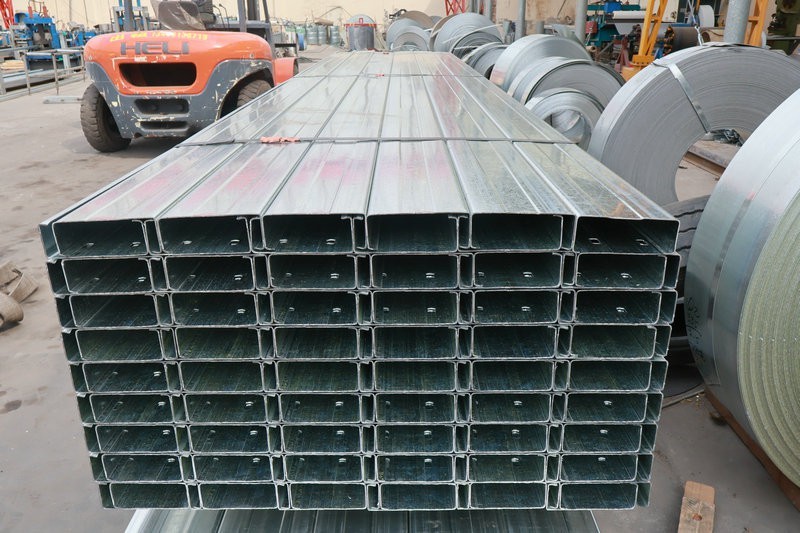
C-shaped steel is a type of cold-formed steel created by processing steel strips or plates through continuous rolling and bending to achieve a C-shaped cross-section. Compared to standard flat steel plates, the C-shaped profile offers superior structural support while maintaining a lighter weight.
C-shaped steel is commonly found in: roof purlins; wall purlins; steel-structure factories, warehouses, and workshops; solar mounting systems; equipment support structures; and door/window frames or lightweight structures. Depending on the manufacturing process and surface treatment, C-shaped steel available on the market can be categorized into types such as standard black (uncoated) steel, galvanized steel, and coated steel.
The primary component of C-shaped steel is steel itself; the iron within the steel is prone to oxidation when exposed to both moisture and oxygen.
When C-shaped steel is exposed to a humid environment for an extended period, rust spots may gradually appear on its surface. If the environment contains high concentrations of salt, acidic substances, or other corrosive agents, the rate of corrosion can accelerate significantly. Particular attention must be paid to corrosion prevention for C-shaped steel in the following environments: long-term outdoor use, high-humidity areas, coastal regions, areas with industrial pollution, chemical production zones, and locations with prolonged exposure to water. Consequently, standard, untreated C-shaped steel cannot be considered a permanently rust-proof material.
Among the various anti-corrosion methods for C-shaped steel, galvanizing is a common choice. Galvanized C-shaped steel features a zinc layer on its surface; this layer minimizes direct contact between the steel and elements like moisture and oxygen, thereby enhancing corrosion resistance. The zinc layer provides not only a physical barrier but also, under certain conditions, sacrificial anode protection. If localized damage occurs on the steel surface, the zinc corrodes preferentially, thereby protecting the underlying steel to some extent. Therefore, galvanized C-shaped steel generally offers superior corrosion resistance compared to untreated C-shaped steel.
However, galvanizing does not guarantee immunity to rust forever. If the zinc layer is subjected to prolonged exposure to moisture, salt spray, acidic or alkaline environments, or mechanical abrasion, the protective coating will gradually wear away. Corrosion may still occur after the steel surface has been exposed for an extended period.
Painting is another common anti-corrosion method for C-shaped steel. Applying anti-rust primer and topcoat to the steel surface reduces direct contact with moisture and oxygen, thereby slowing the rate of corrosion. With a proper coating system, C-shaped steel can achieve effective corrosion protection.
However, the quality of the coating significantly impacts the final result. If the steel surface is not properly prepared—leaving behind oil, rust, or dust—coating adhesion may be compromised. Additionally, if the coating cracks, peels, or becomes scratched, timely repair is necessary; otherwise, corrosion may spread from the damaged areas.
The primary difference between standard C-shaped steel and galvanized C-shaped steel lies in the surface anti-corrosion treatment.
- Standard C-shaped steel typically requires anti-corrosion protection via painting or other methods. For dry indoor environments, standard C-shaped steel can usually meet performance requirements provided it undergoes appropriate anti-corrosion treatment.
- Galvanized C-shaped steel feature a protective zinc layer formed during production, offering superior corrosion resistance during use. They are often the preferred choice for outdoor construction, roofing structures, and high-humidity environments.
The specific choice should be determined based on design requirements and the actual operating environment.
Yes, it is. For galvanized C-shaped steel, the thickness of the zinc layer and the quality of the coating directly affect corrosion resistance. Generally, assuming other conditions are similar, an adequate zinc layer provides longer-lasting protection.
Therefore, when purchasing galvanized C-shaped steel, one should not focus solely on price but also consider technical specifications such as base material thickness, zinc layer thickness, galvanizing method, steel strength, and surface quality. For long-term outdoor use, the anti-corrosion grade should be selected to meet local environmental requirements.
Certain areas of C-shaped steel are more susceptible to corrosion than flat surfaces.
(1) Cut ends: Cutting C-shaped steel on-site can compromise the original protective layer at the cut edge, necessitating appropriate anti-corrosion treatment.
(2) Drilled holes: Drilling during installation can damage the protective surface coating in localized areas.
(3) Welded areas: Welding galvanized C-shaped steel damages the coating locally; therefore, anti-corrosion touch-ups are required after welding in accordance with specifications.
(4) Connection points: Areas where bolts, connectors, and plates meet can accumulate water over time, increasing the risk of corrosion.
Consequently, the quality of installation and construction also impacts the service life of C-shaped steel.
To enhance the rust resistance of C-shaped steel, one can focus on three aspects: material selection, surface treatment, and ongoing maintenance.
(1) Choose galvanized C-shaped steel: For structures requiring long-term outdoor exposure, prioritize galvanized C-shaped steel that meet project specifications.
(2) Apply surface coatings: For standard (non-galvanized) C-shaped steel, anti-corrosion protection can be achieved by applying both a primer and a topcoat.
(3) Avoid prolonged water accumulation: During design and installation, every effort should be made to prevent C-shaped steel from remaining in an environment where water collects for extended periods.
(4) Repair damaged areas: If surface scratches occur during transportation or construction, anti-corrosion repairs should be carried out promptly.
(5) Regular inspection: For steel structures in long-term use, regular inspections should be conducted to check for rust spots, coating detachment, and localized corrosion.
Many people believe that the service life of C-shaped steel depends solely on the thickness of the steel, but this is not the case. Factors affecting its lifespan include: steel quality; steel thickness; surface anti-corrosion method; quality of the galvanized layer; local climate; humidity; exposure to salt spray; installation quality; and routine maintenance. For instance, C-shaped steel of the same specifications may corrode at significantly different rates depending on whether it is used in a dry indoor environment or a coastal area with high salt spray levels.
Therefore, when selecting C-shaped steel, it is necessary to make a comprehensive assessment based on the actual operating environment.
Standard C-shaped steel is not inherently rust-proof. Since it is primarily made of steel, it remains susceptible to rusting under the long-term influence of moisture, oxygen, and corrosive environments. However, its corrosion resistance can be significantly enhanced through treatments such as hot-dip galvanizing, electro-galvanizing, painting, and other anti-corrosion measures. Galvanized C-shaped steel, in particular, features a protective zinc layer and is widely used in applications such as building purlins, steel-structured factories, warehouses, and outdoor structures.
If C-shaped steel is used in humid, open-air, or coastal environments, special attention should be paid to the steel's anti-corrosion grade, the quality of the zinc coating, and the installation method. Additionally, regularly inspecting cut ends, connection points, and surface coatings after installation helps extend the material's service life.
Ultimately, the rust resistance of C-shaped steel is not a simple "yes" or "no" matter; it depends on the steel itself, the surface treatment, the usage environment, and maintenance practices. Selecting a C-shaped steel product that matches the specific environment is key to ensuring stable, long-term performance.
China galvanized plate manufacturer: Boxing Shuangshengda Steel specializes in galvanized sheet, galvanized steel plate,Colour steel plate etc.We have a full range of product specifications and types, low prices, and more than 20 years of experience, worthy of your trust

 Address:Bo Xing County, Shandong Province
 E-mail: