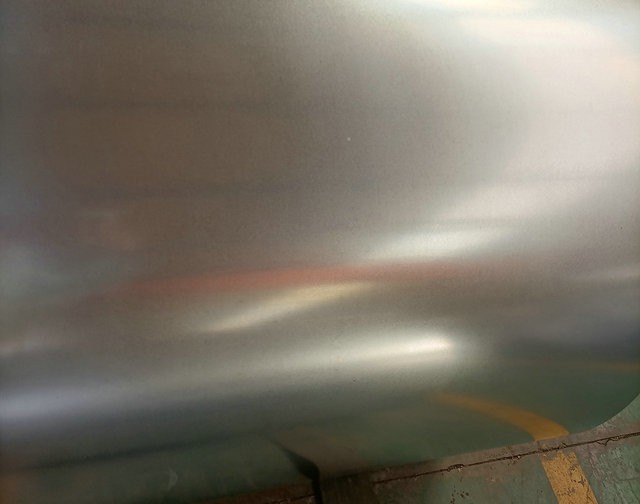
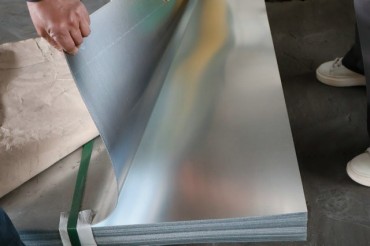
Is galvanized steel sheet stronger than regular steel?

On the stage of steel, galvanized steel sheet and ordinary steel are often compared, and the result is self-evident - galvanized steel sheet is stronger than ordinary steel! As a basic material, ordinary steel has certain performance in strength and hardness, but it is easily affected by the environment and rusts and corrodes. Galvanized steel sheet is different. It is coated with a layer of zinc on top of ordinary steel, like putting on a strong armor, which not only enhances corrosion resistance, but also further improves overall performance, and can demonstrate superior performance in various application scenarios.

This article systematically explores the strength differences between galvanized steel sheet and ordinary steel by analyzing the impact mechanism of galvanizing process on material properties, combined with national standards and industry practices, providing scientific basis for engineering material selection.


Galvanized steel sheet


1. Strength characteristics of galvanized steel sheet: process influence and performance boundary


(1) The dual effect of galvanizing process on mechanical properties

The strength characteristics of galvanized steel sheet stem from the synergistic effect of the performance of the base steel and the galvanized layer. In the hot-dip galvanizing process, steel needs to undergo processes such as acid pickling, assisted plating, and hot-dip galvanizing. The hot-dip temperature of 450 ℃ -470 ℃ may cause changes in the grain structure of the steel. Experimental data shows that the yield strength of hot-dip galvanized steel sheet decreases by an average of 3% -5%, the tensile strength decreases by 2% -4%, but the elongation rate increases by 5% -8%. This change is due to the grain refinement effect caused by high-temperature treatment, which improves the plasticity and toughness of the material while sacrificing some strength indicators.

The electroplating process has a relatively small impact on the mechanical properties, as it does not change the microstructure of the steel substrate by electrodepositing a zinc layer. However, due to the thickness of the coating (usually 5-25 μ m), its rust prevention ability is significantly weaker than hot-dip galvanizing, making it suitable for indoor dry environments.


(2) The added value of galvanized layer

The core value of galvanized coating lies in its environmental adaptability. According to the national standard GB/T 13912-2002, the average thickness of hot-dip galvanized layer should be ≥ 65 μ m (when the steel thickness is ≥ 6mm), and it can provide anti-corrosion protection for more than 20 years. In high salt spray environments along the coast, the corrosion rate of galvanized steel sheet is only 1/15 of that of ordinary steel. This environmental stability indirectly enhances the effective service life of the material, equivalent to the "time dimension extension" of the strength index.


2. Strength advantages of ordinary steel: material properties and process optimization


(1) The absolute advantage of basic mechanical properties

Ordinary steel can achieve strength indicators far exceeding galvanized steel sheet through alloying design and heat treatment processes. The yield strength of Q345B structural steel reaches 345MPa, and the tensile strength is 470-630MPa; After quenching and tempering treatment, the tensile strength of 45 # carbon structural steel can reach 600-800MPa. In contrast, Q235B (yield strength 235MPa) is commonly used as the base material for galvanized steel sheet, with a significant difference in strength.


(2) The engineering value of process controllability

The processing technology of ordinary steel has higher flexibility. The cold rolling process can achieve a thickness accuracy of ± 0.01mm, and the temperature control accuracy of heat treatment can reach ± 5 ℃. This process controllability enables ordinary steel to meet the strength requirements of high-end fields such as aerospace and precision instruments. For example, after T6 treatment, the tensile strength of 7075 aluminum alloy forgings can reach 572MPa, and the performance can be further optimized through aging process.


Galvanized steel sheet


3. Dimension analysis of intensity comparison: application scenarios determine technical routes


(1) Priority of Strength in Static Load Scenarios

In the field of static loads such as building structures and bridge engineering, the strength advantage of ordinary steel plays a decisive role. According to GB 50017-2017 "Design Standard for Steel Structures", the stability coefficient of Q345 steel in axially compressed members is increased by 18% -25% compared to Q235. This strength difference directly translates into a reduction in material usage. For example, in a 30m span factory building, using Q345 steel can save 12% of steel usage compared to Q235.


(2) Comprehensive performance requirements for dynamic load scenarios

In the fields of dynamic loads such as automobile manufacturing and mechanical equipment, the corrosion resistance and fatigue strength of galvanized steel sheet form unique advantages. After 2 million bending tests, the crack propagation rate of galvanized sheet for automotive chassis is reduced by 40% compared to ordinary steel. This performance improvement is due to the cathodic protection effect of the galvanized layer on the substrate, effectively delaying the initiation of fatigue cracks.


(3) Reconstruction of the Importance of Environmental Adaptability Dimensions

In corrosive environments such as marine engineering and chemical equipment, the environmental stability of galvanized steel sheet leads to a "relative enhancement" effect on its strength indicators. Data from a certain offshore platform project shows that the maintenance cycle for galvanized steel sheet components has been extended to 8 years, while ordinary steel requires anti-corrosion treatment every 2 years. This difference in maintenance costs is equivalent to an "economic equivalent improvement" in intensity indicators.


4. Technical Standards and Selection Principles: Decision Logic from Indicators to Systems


(1) The technical threshold of national standards

GB/T 2518-2008 "Continuously hot-dip galvanized steel sheet sheet and strip" stipulates that the weight of the galvanized layer should meet the requirements of Z100-Z600 grade (coating weight of 100-600g per square meter). This standardization ensures the performance reliability of galvanized steel sheet in different environments. At the same time, GB/T 700-2006 "Carbon Structural Steel" sets clear requirements for the chemical composition and mechanical properties of ordinary steel, forming a complete technical specification system.


(2) Systematic thinking in engineering selection

A three-dimensional evaluation model of "performance cost environment" needs to be established for material selection. In a dry indoor environment, the cost advantage of ordinary steel is significant (galvanizing process increases costs by 15% -20%); In a moderately corrosive environment, the lifecycle cost of galvanized steel sheet is reduced by 25% -30% compared to ordinary steel; In severely corrosive environments, this advantage extends to over 40%. This cost difference essentially reconstructs the economic value of intensity indicators.


5. Future Trends: Material Composite and Performance Customization


(1) The technological upgrade path of galvanized steel sheet

The new generation of galvanized aluminum magnesium alloy sheet increases the self-healing ability of the coating by three times by adding 1% -3% magnesium element, and reduces the corrosion rate by 60% compared to traditional galvanized steel sheet. This material innovation enables galvanized steel sheet to maintain its anti-corrosion advantages while approaching the strength index of Q345 steel.


(2) The intelligent development direction of ordinary steel

Through microalloying (adding elements such as Nb, V, Ti, etc.) and controlled rolling and cooling processes, the strength indicators of ordinary steel continue to improve. The Q390GJ construction steel developed by a certain enterprise has a yield strength of 390MPa and maintains an elongation of 22%, achieving a balance between strength and toughness.
In summary, galvanized steel sheet is undoubtedly stronger than ordinary steel. It has achieved a qualitative leap in corrosion resistance, service life, and strength through galvanizing process. In the field of architecture, it can withstand wind and rain erosion for a long time, ensuring building safety; In industrial manufacturing, equipment loss can be reduced and production efficiency can be improved. Looking ahead to the future, with the continuous advancement of technology, the performance of galvanized steel sheet will be further optimized and its application scope will become more extensive. We have reason to believe that galvanized steel sheet will play a key role in more fields and contribute greater strength to social development.
Contact
 Address:Bo Xing County, Shandong Province
 E-mail:ssd@cnsststeel.com