C shaped steel, also known as cold-formed C shaped steel, is a steel material with a cross-section in the shape of a "C" that is produced through the cold bending process. It is usually processed by cold bending machines from hot-rolled plates or strips, and has the advantages of light weight, high strength, and material saving. It has various specifications and can be customized in size and thickness according to different needs. C shaped steel, with its own characteristics, can be used as purlins, wall beams, and support building structures in the field of architecture; In mechanical manufacturing, it can serve as structural components such as columns and beams, providing stable support for equipment, and is an indispensable and important profile in industrial production.
This article will systematically expound the technical connotation and development value of C shaped steel from four dimensions: defining features, manufacturing processes, performance advantages, and application fields.
1. Definition and structural characteristics of C shaped steel
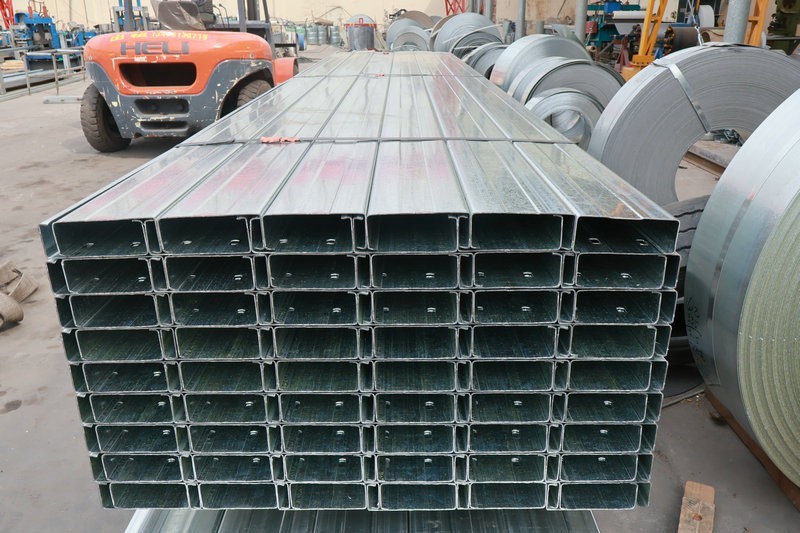
C shaped steel is a cold-formed thin-walled steel with a cross-section of "C" shape, named after the first letter of the English letter "Channel". This profile is made by hot rolling or cold rolling steel plates through cold bending forming process, and the standard section is composed of a closed cavity structure consisting of a web plate, an upper flange, and a lower flange. Typical specifications include a height of 80-160mm, a flange width of 40-70mm, and a wall thickness of 1.5-3.0mm. The length can be customized according to engineering requirements, but is usually not more than 12 meters due to transportation restrictions.
Compared with traditional I-beams, the flanges of C shaped steel have been widened, keeping the inner and outer surfaces parallel. This design significantly improves the connection convenience of the components. Its cross-sectional coefficient is 1.3-1.5 times that of ordinary channel steel, which can reduce material consumption by 30% under the same bearing conditions. Through finite element analysis verification, the deflection deformation of C shaped steel under uniformly distributed load is reduced by 42% compared to channel steel, demonstrating better bending stiffness.
2. Manufacturing process system of C shaped steel
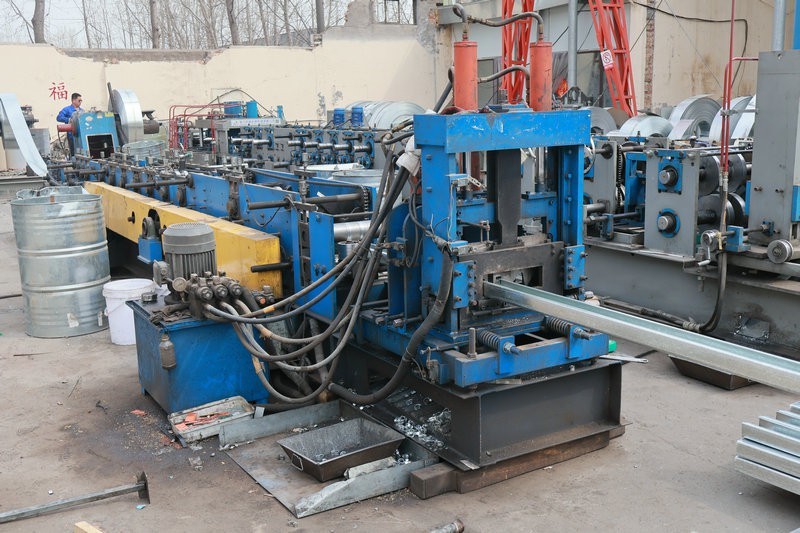
The production of C shaped steel adopts fully automated cold bending forming technology, and the core equipment is the C shaped steel forming unit. The system integrates 9 processes including feeding, leveling, punching, forming, and cutting, and achieves parameterized production through a computer control system. The specific process flow is as follows:
(1) Material pretreatment: Q235, Q345 and other low carbon steel or stainless steel hot rolled plates are selected, and after acid pickling, rust removal and sandblasting treatment, the cleanliness reaches Sa2.5 level to ensure coating adhesion.
(2) Cold bending forming: Using multiple sets of rolling mill progressive deformation technology, the flat plate is continuously bent into a C-shaped section. The key control parameters include roll gap (± 0.1mm), forming speed (8-15m/min), and temperature control (room temperature to 150 ℃).
(3) Hole design: The CNC punching module is used to process connection holes on the flange or web plate, with a hole diameter accuracy of ± 0.05mm and a hole edge margin error controlled within 0.5mm, meeting the requirements of high-strength bolt connection.
(4) Post treatment process: Choose surface treatment methods such as galvanizing, painting, or electrophoretic coating according to the usage environment. The thickness of hot-dip galvanized layer can reach over 80 μ m, and the corrosion resistance time of salt spray test exceeds 500 hours.
Modern production lines have achieved the production capacity of "one machine, multiple types". By quickly replacing the rolling mill molds, more than 20 types of modified products such as galvanized C shaped steel, solar bracket C shaped steel, and automotive profile C shaped steel can be produced on a single production line. The comprehensive utilization rate of equipment has been increased to over 85%.
3. Analysis of Performance Advantages of C-shaped Steel
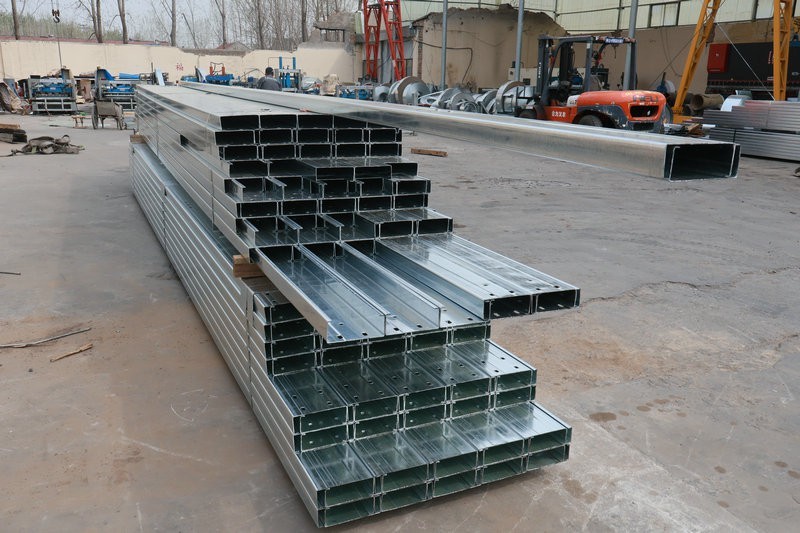
(1) Structural efficiency optimization: The cold bending forming process distributes the material reasonably along the stress direction, and the section modulus is 2-3 times higher than that of solid steel. In the application of roof purlins, the unit area bearing capacity reaches 12kN/m ², meeting the live load requirement of 0.75kN/m ².
(2) Lightweight design: Thin walled structures with a thickness of 1.5-3.0mm reduce their own weight by 40% compared to traditional profiles, significantly reducing foundation loads. Taking a 12 meter span roof truss as an example, using a C shaped steel composite structure can reduce weight by 1.2 tons and lower transportation costs by 35%.
(3) Connectivity adaptability: The standardized hole design supports modular installation, and the parallel surface of the wing edge facilitates quick connection using self tapping screws, increasing construction efficiency by 50%. After testing, the shear strength of a single connection point reaches 8.5kN, meeting the requirements for seismic fortification at 8 degrees.
(4) Economic indicators: Taking into account material costs, processing expenses, and installation costs, the C shaped steel scheme reduces the total cost by 28% compared to the channel steel system. In a 100000 square meter steel structure project, a direct economic benefit of 4.2 million yuan can be achieved.
4. Expansion of Application Fields for C-shaped Steel
(1) Building structural system: As the primary and secondary purlins of the steel structure factory building, they bear the load transmission of the roof and wall enclosure system. In single story industrial buildings, the spacing between C shaped steel purlins can reach 1.5m, reducing the number of components by 40% compared to traditional solutions.
(2) Equipment support system: used for structural components such as columns, beams, and arms in mechanical manufacturing. In the application of CNC machine tool bases, the stiffness gradient distribution is achieved through variable cross-section design, and the vibration attenuation coefficient is increased by three times.
(3) In the field of new energy, the solar bracket system adopts C shaped steel as the main load-bearing component. In the photovoltaic power station projects in the northwest region, it has undergone temperature difference tests from -30 ℃ to+50 ℃, and the deformation during the 10-year service life is less than 3mm.
(4) Infrastructure: The highway guardrail columns use C shaped steel instead of traditional square pipes, which increases the impact energy absorption capacity by 25% and reduces the accident rate by 18% on heavy-duty traffic sections.
With the breakthrough of prefabricated building technology, C shaped steel is developing towards standardization and serialization. The current national standard GB/T 6725-2017 covers the 80-400mm height series, and in the future, the focus will be on developing high-strength steel C shaped steel (yield strength ≥ 550MPa) and weathering steel C shaped steel (corrosion resistance index ≥ 6.5) to promote the continuous improvement of profile performance.
As a "lightweight revolutionary" in modern engineering structures, C shaped steel is constantly expanding its application boundaries through technological innovation. Its unique structural advantages and economic value make it a key supporting material for the transformation and upgrading of the steel structure industry. With the deep integration of intelligent manufacturing technology, the C shaped steel industry will move towards a higher level of standardization, customization, and intelligent development.

 Language


 Address:Bo Xing County, Shandong Province
 E-mail: