
 Language


More Language
Language
Galvanized plate, a widely used metal material, is favored for its excellent anti-corrosion properties. In this, the zinc layer thickness is undoubtedly an important indicator of the quality and service life of galvanized plate. So, how much attention is paid to the thickness of the zinc layer on the surface of galvanized plate?
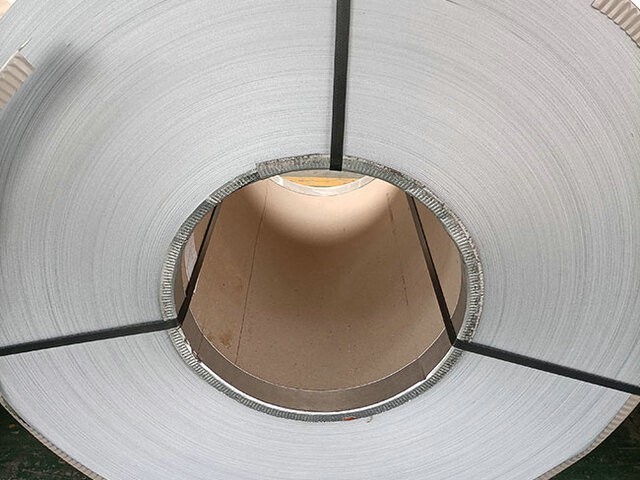
Galvanized plate as an anti-corrosion material, has a wide range of applications in many fields. The thickness of the zinc layer is one of the important technical indicators, which directly affects the corrosion resistance and service life of the galvanized plate. In general, the thicker the zinc layer, the better the anti-corrosion performance and longer service life. The International Zinc Association (IZA) points out that for every 10g/m² increase in the thickness of the zinc layer, the corrosion-resistant life can be extended by about 1-2 years (non-salt spray environment).
The thickness of the zinc layer of galvanized plate is usually expressed in “grams per square meter (g/m²)” for the sum of both sides, or “microns (μm)” for the thickness of one side. Different countries and industries have clear grading standards:
- General purpose: Z80-Z350 (i.e. 80-350g/m², corresponding to a thickness of about 5.6-24.5μm on one side).
- Construction boards: common Z120-Z275 (120-275g/m²), with higher anti-corrosion requirements.
- G60 (60g/m²) to G210 (210g/m²), automotive panels mostly G30-G90.
- Classified as Z12-Z60 (120-600g/m²), of which Z27 (270g/m²) is commonly used for outdoor structures.
- Low zinc layer: 10-60g/m² (e.g. Z10-Z60) for mildly corrosive environments (indoor dry environments).
- Medium zinc layer: 60-120g/m² (e.g. Z60-Z120) for normal outdoor environments (building enclosures, appliance housings).
- High zinc layer: 120-275g/m² (e.g. Z120-Z275), for strong corrosive environments (coastal areas, chemical plants).
automobile and home appliance industry mostly use 40-180g/m² (Z40-Z180), color coated substrate for construction often choose 60-275g/m² (Z600-Z275).
The galvanizing process is mainly divided into two kinds: electro-galvanizing and hot dip galvanizing. These two processes have different characteristics and requirements on the thickness of the zinc layer.
Electro-galvanizing is the formation of a zinc layer by attracting and attaching zinc ions to the surface of steel through the technique of decomposition of ionic solutions. Electro galvanized zinc layer is relatively thin, but the surface is flat and smooth. This galvanizing process is suitable for occasions where the corrosion resistance is not too high.
Thickness: Usually 5-20μm (about 10-50 g/m2).
Characteristics:Smooth and uniform surface, suitable for home appliances and electronic products with high requirements for appearance.
Limitation:Limited corrosion resistance, not suitable for long-term outdoor use.
Hot-dip galvanizing is a chemical reaction between zinc metal molecules and steel metal molecules through the metal dissolution reaction technology to produce a thicker alloy zinc layer. As the hot dip galvanized layer is thicker and alloy layer, so its anti-corrosion performance is more superior, suitable for wet, corrosive environment.
Process: The steel sheet is immersed in molten zinc to form an alloy layer with the steel substrate.
Thickness: Usually 40-275μm (about 100-600 g/m2).
Characteristics:Thick zinc layer, strong adhesion, superior corrosion resistance, suitable for construction, transportation and heavy corrosion areas.
Common designation:Z80 (approx. 11 μm/surface), Z275 (approx. 38 μm/surface).
Professional data source:
- International Organization for Standardization (ISO) standard, the lower zinc layer requirement for hot-dip galvanized plate for construction is 50g/m² (about 7 μm/face).
- The Chinese national standard (GB/T 2518-2019) stipulates that the zinc layer code for ordinary hot-dip galvanized plate is Z60-Z350, corresponding to a zinc layer quality of 60-350g/m².
- Magnetic thickness gauge: measuring the thickness of non-magnetic zinc layer through the change of magnetic resistance, fast and non-destructive testing, error ±5% (applicable to steel substrate).
- Microscope method: cutting the cross-section of galvanized plate, direct observation under metallurgical microscope, high precision but destroying the sample. (Refer to GB/T 13912-2020).
-Weighing method: Weighing after dissolving the zinc layer by pickling, applicable to laboratory (ASTM A90/A90M).
- Process parameters: the hot-dip galvanizing temperature (usually 450-465℃) and time, the thicker the zinc layer.
- Corrosive environment: Coastal or high humidity areas need to be ≥180g/m² (e.g. Z180), ordinary urban environment 60-120g/m² (Z60-Z120) can be.
- Processing: Hot-dip galvanizing (HDG) thickness is usually 35-200g/m², electro-galvanizing (EG) is thinner (10-50g/m²) but with better uniformity.
- Substrate composition: Steels with a high silicon content tend to form thicker zinc layers (e.g. the “Sandelin effect”).
- Post-treatment: Passivation or oiling may slightly affect the final thickness.
- Cost control: A 10% increase in zinc thickness increases material costs by 5-8%, balancing the need for corrosion protection with economics.
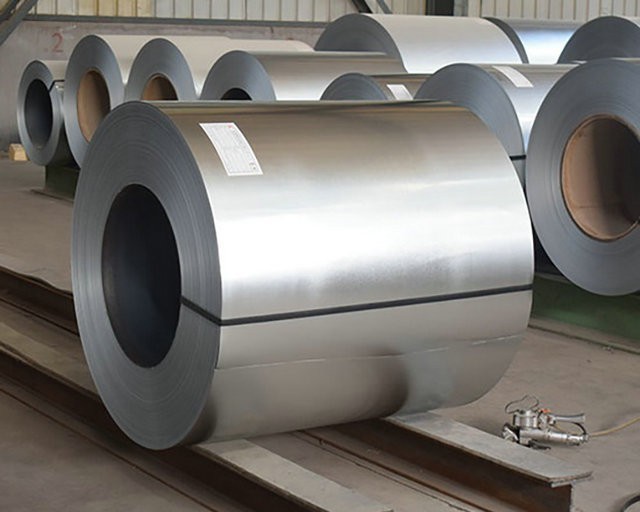
The thickness of the zinc layer directly affects the corrosion resistance and service life of galvanized plate. An excessively thin zinc layer may not provide sufficient protection, leading to rusting in a short period of time, while an excessively thick zinc layer may increase cost and weight, and even affect the strength and reliability of the sheet. Therefore, when selecting galvanized plates, the appropriate thickness of zinc layer should be chosen according to the actual application scenario and the required load-bearing capacity.
Galvanized plate is used as the surface covering layer to improve the corrosion resistance and prolong the service life of steel structure parts such as buildings or bridges with high load-bearing requirements; at the same time, some outdoor billboards need to undergo a long period of wind and sunshine, and choosing the right coating method can improve the stability and aesthetics under the adverse weather conditions.
galvanized plate metal is often seen in furniture production. Some high-grade wooden furniture or metal furniture is easy to be affected by the environment and time and produce oxidation and discoloration and other issues need to consider the use of galvanized plate for rust treatment to improve durability.
in modern automotive interior and exterior components such as seat frames, door guards and hoods and other parts will also be used in large quantities to galvanized plate to enhance the stability and reliability of the overall structure.
In short, the thickness of the zinc layer on the surface of the galvanized plate is a key factor in determining its quality and service life, but not the thicker the better. When choosing galvanized plate, we should consider the national standards, influencing factors and actual needs to ensure that the selected product can achieve excellent economic benefits and meet the requirements of long-term use.
China galvanized plate manufacturer: Boxing Shuangshengda Steel specializes in galvanized sheet, galvanized steel plate,Colour steel plate etc.We have a full range of product specifications and types, low prices, and more than 20 years of experience, worthy of your trust

 Address:Bo Xing County, Shandong Province
 E-mail: